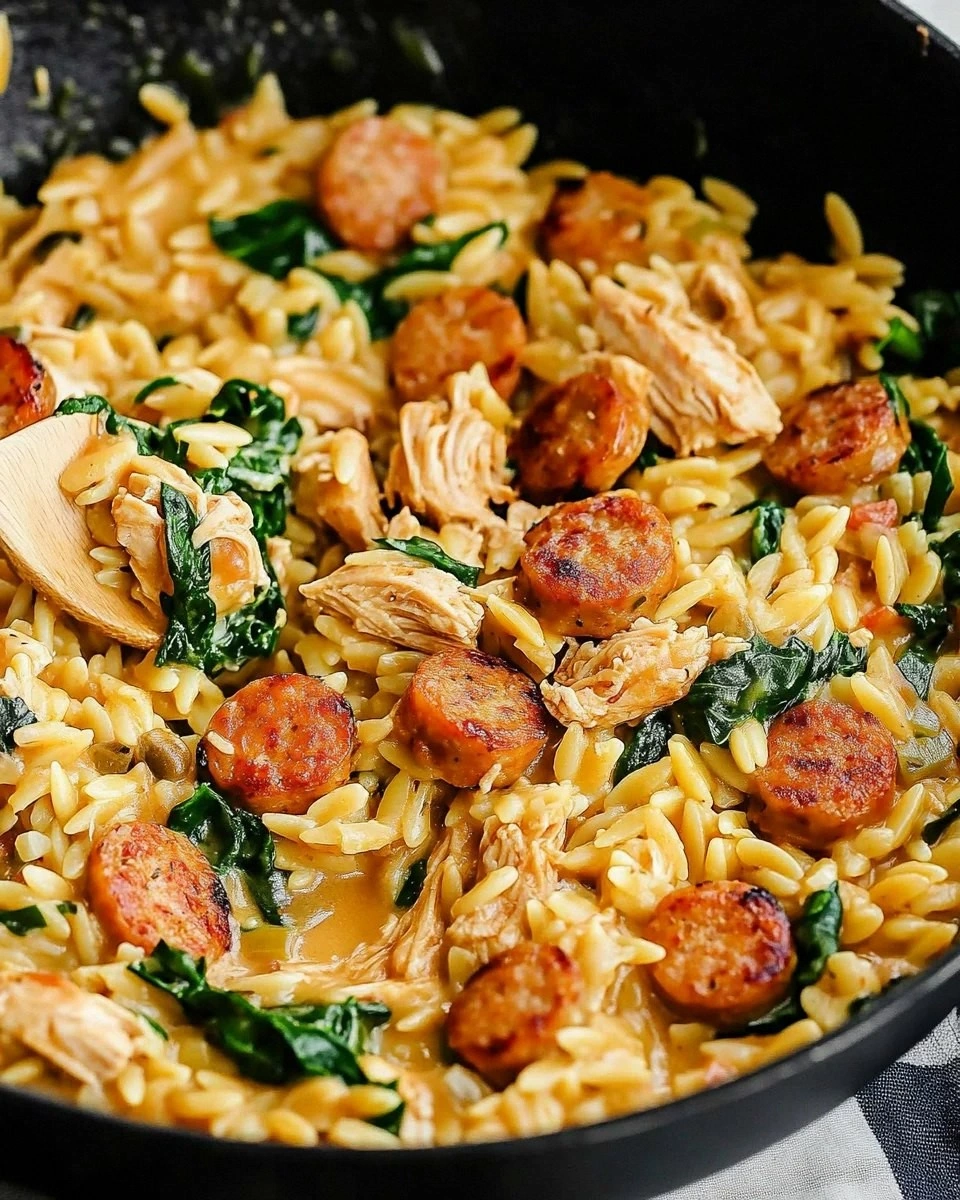
I still remember the Wednesday night I accidentally created what my family now calls "The Skillet That Saved Dinner." There I was, staring at a fridge that held nothing but questionable leftovers, a pack of chicken sausage I'd forgotten about, and half a box of orzo that had been sitting in my pantry since the Obama administration. My kids were circling like hungry vultures, my husband was giving me that "what's for dinner" look that every home cook knows too well, and I was about thirty seconds away from ordering pizza and calling it a day.
But something magical happened when I started browning those chicken sausages. The kitchen filled with this incredible aroma of garlic and herbs, and suddenly I was playing kitchen MacGyver, tossing things into my cast iron skillet like I actually knew what I was doing. That sizzle when the orzo hit the pan? Absolute perfection. The way the cream sauce came together, coating every little pasta grain like liquid velvet? I knew I was onto something special. By the time I grated that final shower of Parmesan over the top, my family was literally hovering behind me, forks in hand, like something out of a cartoon.
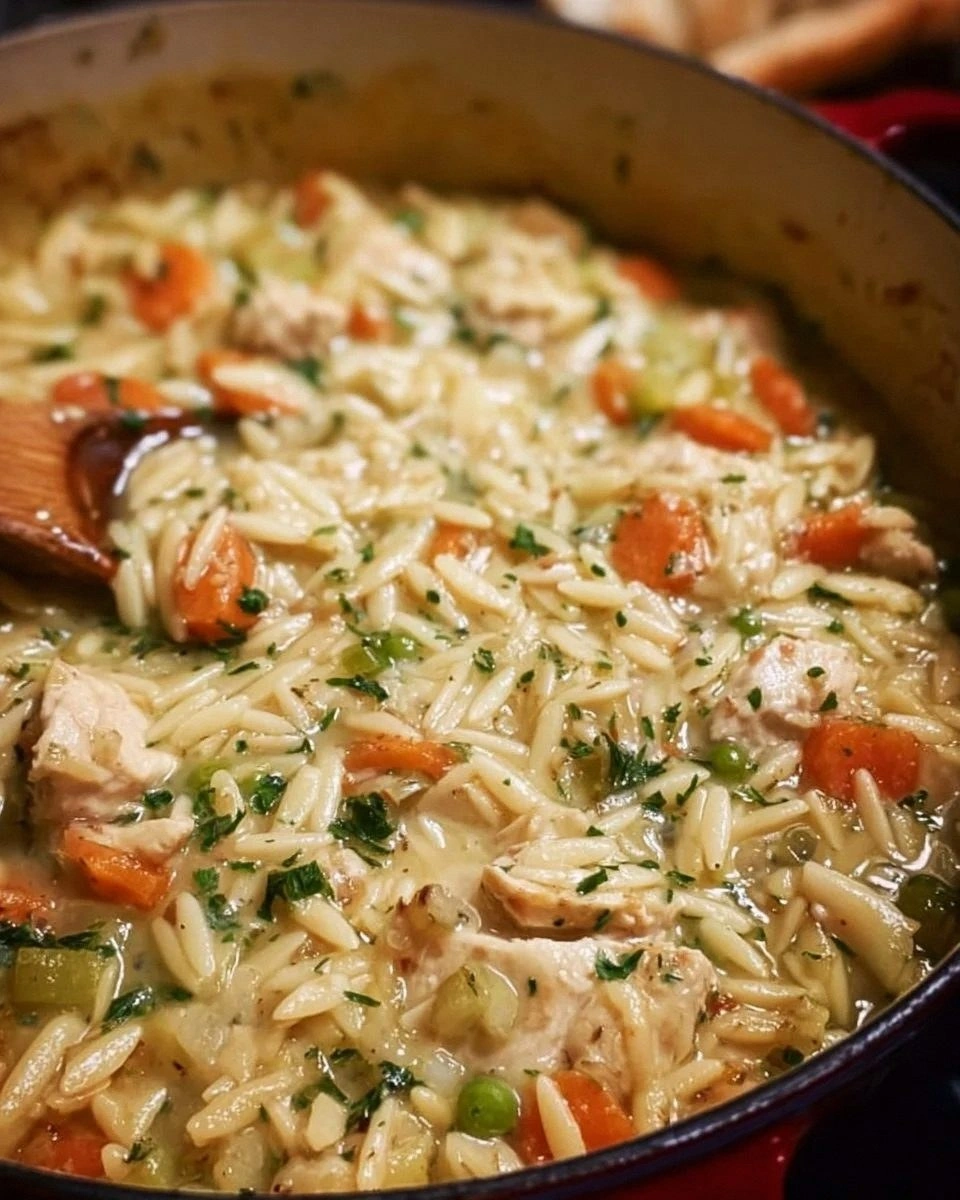
Here's the thing about this Creamy Chicken Sausage Orzo Skillet — it's not just another one-pot meal. This is the kind of dish that makes you feel like a culinary genius even when you're just throwing together whatever's in your fridge. The orzo cooks right in the sauce, releasing its starch and creating this incredibly creamy texture that would make any Italian nonna weep with joy. The chicken sausage brings this amazing depth of flavor that regular chicken just can't match, and the whole thing comes together in under thirty minutes. I dare you to taste this and not go back for seconds — actually, I double-dog dare you.
What really sets this apart from every other skillet recipe floating around the internet is the technique I stumbled upon that night. Instead of cooking the orzo separately and tossing it in at the end (which is what most recipes get completely wrong), we're going to toast it right in the rendered sausage fat. This little move transforms those humble pasta grains into tiny flavor bombs that'll make you wonder why you've been cooking pasta wrong your entire life. Stay with me here — this is worth it.
What Makes This Version Stand Out
One-Pot Wonder: Everything cooks in a single skillet, which means more flavor and fewer dishes. The orzo absorbs all those gorgeous chicken sausage drippings as it cooks, creating a depth of flavor that would normally take hours to develop. Plus, you won't be stuck washing a mountain of pots when you could be enjoying dessert.
Speed Demon: From fridge to table in under thirty minutes, making this perfect for those "I forgot to plan dinner" nights. Most recipes take twice as long because they make you cook components separately, but we're working smarter, not harder. Picture yourself pulling this out of the oven, the whole kitchen smelling incredible, while your neighbors are still waiting for their takeout.
Leftover Legend: This actually tastes better the next day, which is practically unheard of for creamy pasta dishes. The flavors meld together overnight, and a quick reheat with a splash of water brings it right back to its former glory. I'll be honest — I ate half the batch before anyone else got to try it, and I have zero regrets.
Flexible Foundation: Once you master the technique, you can swap in whatever vegetables or proteins you have on hand. Spinach wilts in beautifully, sun-dried tomatoes add a tangy punch, and peas bring sweet pops of color. This recipe is a playground for creative cooks.
Comfort Food Royalty: That creamy sauce coats every bite like a warm blanket, while the crispy sausage edges add just enough texture to keep things interesting. It's the kind of meal that makes everyone at the table go quiet except for the occasional "mmm" between bites.
Budget-Friendly Brilliance: Using chicken sausage instead of expensive cuts of meat keeps costs down without sacrificing flavor. A single pack feeds a family of four for under ten dollars, which is cheaper than most fast food meals and about a thousand times more satisfying.
Crowd-Pleasing Power: Even the pickiest eaters can't resist this combination of creamy pasta and savory sausage. My neighbor's eight-year-old, who won't touch anything green, devours this and asks for seconds. Okay, ready for the game-changer?
Inside the Ingredient List
The Flavor Base
Chicken sausage is the undisputed star here, and not all links are created equal. You want the kind that's already seasoned — I'm talking garlic and herb, sun-dried tomato, or even apple if you're feeling adventurous. The beauty of chicken sausage is that it's already cooked, so we're just browning it for texture and flavor. Those crispy edges that shatter like thin ice under your fork? That's where the magic lives. Skip the raw chicken sausage for this recipe — we want that concentrated flavor that only comes from pre-cooked links.
Onion forms the aromatic backbone of our dish, melting down into sweet, jammy perfection. I prefer yellow onions for their balance of sweetness and sharpness, but white onions work if that's what you have. The key is to let them go low and slow until they're translucent and starting to brown at the edges. This isn't the time for quick cooking — those caramelized bits are flavor bombs that'll make your sauce taste like it's been simmering for hours.
Garlic is non-negotiable here, and fresh is the only way to go. Those pre-minced jars in oil might seem convenient, but they taste like disappointment and regret. Fresh garlic, minced right before it hits the pan, releases these incredible aromatic compounds that make your kitchen smell like a trattoria. If you've ever struggled with bitter garlic, you're not alone — and I've got the fix: add it after the onions are soft, and don't let it brown.
The Texture Crew
Orzo might look like rice, but it's actually pasta, and it's about to become your new weeknight best friend. Those little grains have this incredible ability to absorb flavors while maintaining a pleasant bite. Most recipes get this completely wrong by treating orzo like regular pasta, but we're going to toast it first in the sausage fat. This creates a nutty flavor and prevents that gummy texture that ruins so many pasta dishes. Trust me on this one — once you try toasted orzo, there's no going back.
Heavy cream is what transforms this from "eh, it's okay" to "holy cow, what did I just put in my mouth?" The fat content matters here — go for the real stuff, not that sad reduced-fat imposter. The cream reduces down, coating each grain of orzo like velvet while picking up all those beautiful browned bits from the bottom of the pan. If you're thinking about substituting milk, let me stop you right there. This is not the time for health food.
Chicken broth brings depth and prevents the cream from becoming too heavy. I always use low-sodium broth because it lets me control the salt level — there's nothing worse than an over-salted dish that you can't fix. The broth should be warm when you add it, which helps everything come together smoothly. Cold broth can cause the cream to seize up, and nobody wants grainy sauce.
The Unexpected Star
Sun-dried tomatoes are my secret weapon here — they bring this intense umami punch that makes people ask "what's in this?" without being able to put their finger on it. The oil-packed ones are worth seeking out; they're softer and more flavorful than their dried counterparts. Chop them finely so they distribute throughout the dish, giving you little bursts of tangy sweetness in every bite. If you've only got dried ones, rehydrate them in warm water for twenty minutes first.
Fresh spinach adds color and nutrition without tasting like health food. It wilts down to almost nothing, so don't be shy about adding a big handful. The key is to add it at the very end so it stays vibrant green rather than turning that sad army color. Baby spinach works best because you don't need to remove any tough stems — just toss it in and watch it disappear into creamy goodness.
The Final Flourish
Parmesan cheese is where we finish strong, and I'm talking about the real stuff — Parmigiano-Reggiano if you can swing it. Pre-grated cheese in those green cans has its place, but that place is not in this dish. Freshly grated Parmesan melts into the sauce, creating these long, silky strands that make every bite feel luxurious. Save some for sprinkling on top — there's something deeply satisfying about that final snow of cheese over your steaming skillet.
Fresh herbs wake everything up right at the end. Parsley is classic, but basil or even chives work beautifully. The trick is to add them off the heat so they stay bright and fresh instead of turning that dull green color. Chop them right before serving — herbs start losing their punch the moment you cut them. If you've ever wondered why restaurant food tastes brighter than yours, this is probably why.
Everything's prepped? Good. Let's get into the real action...
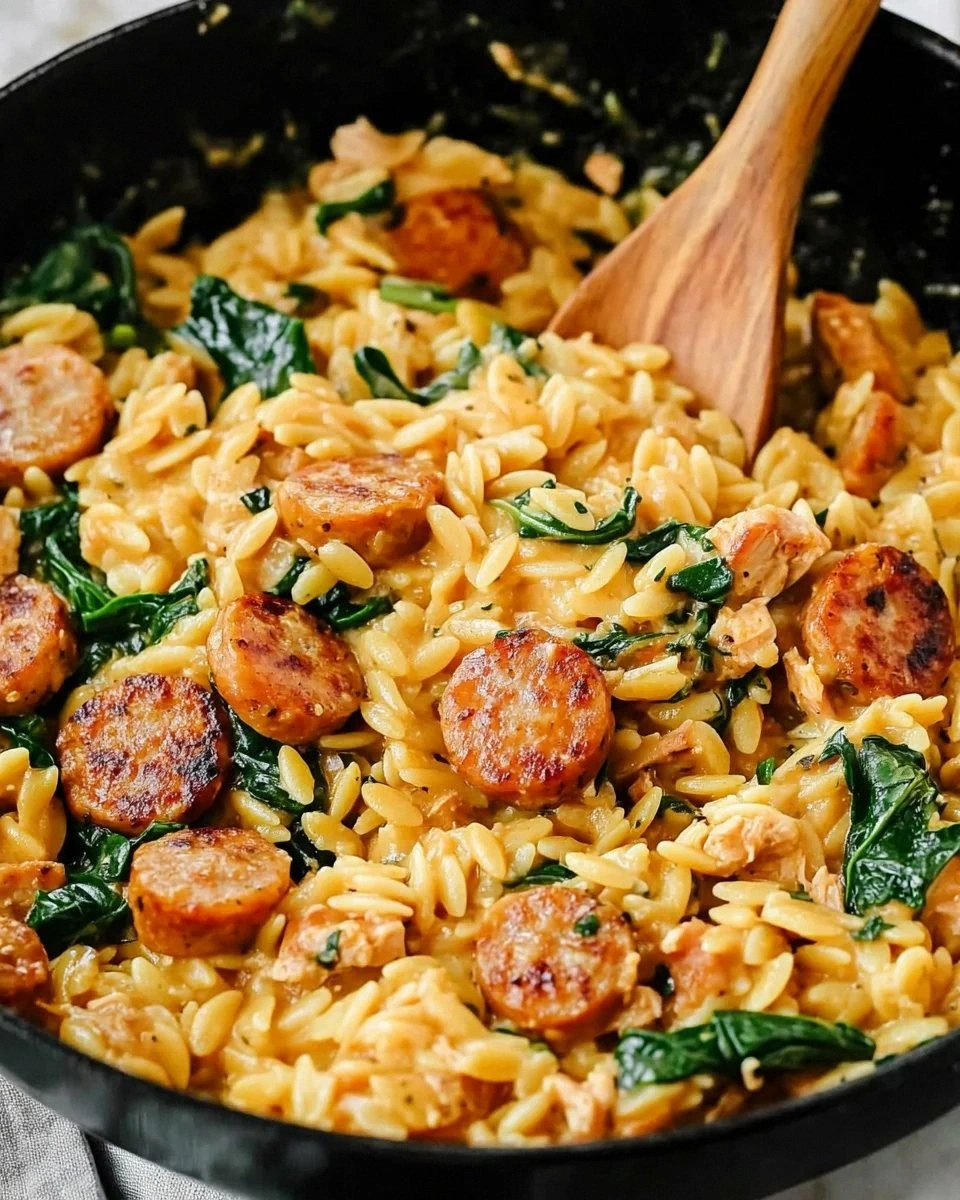
The Method — Step by Step
- Start by heating your largest skillet over medium-high heat. Cast iron is ideal here because it holds heat so well, but any heavy-bottomed pan will work. Slice your chicken sausage into half-moons about a quarter-inch thick — not too thin or they'll disappear into the sauce, not too thick or they won't get those gorgeous crispy edges we're after. Add a drizzle of olive oil to the hot pan, then lay the sausage slices in a single layer. Now, here's the crucial part: don't touch them for at least three minutes. Let them develop that beautiful golden-brown crust before you even think about stirring. Your patience will be rewarded with crispy edges that shatter like thin ice under your fork.
- While the sausage works its magic, dice your onion into small, even pieces. The size matters here — too big and they won't melt down properly, too small and they'll burn before they caramelize. Once the sausage is golden on both sides, remove it to a plate but leave all those gorgeous brown bits in the pan. This is pure flavor gold, and we're about to build an entire sauce on this foundation. Reduce the heat to medium and add your diced onion right into the sausage fat, stirring to coat every piece.
- Now we play the waiting game. Let those onions cook slowly, stirring occasionally, until they transform from sharp and white to sweet and golden. This usually takes about eight to ten minutes, and it's where most people rush things. Don't. The onions should smell sweet and look translucent, with some pieces starting to brown at the edges. If they start sticking, add a splash of water and scrape up those bits — they're building blocks of incredible flavor.
- Add your minced garlic and cook for just thirty seconds. This next part? Pure magic. Pour in your orzo and stir constantly for two minutes, letting each grain get coated in the flavorful oil and toast slightly. The pasta should start to smell nutty and take on a light golden color. This is the moment of truth — properly toasted orzo has this incredible depth that transforms the entire dish. Don't walk away from the stove here.
- Pour in the chicken broth and bring it to a boil, scraping up all those beautiful brown bits from the bottom of the pan. Add the sun-dried tomatoes and a generous pinch of salt and pepper. Reduce the heat to a gentle simmer and let it bubble away for about ten minutes, stirring occasionally. The orzo will absorb most of the liquid as it cooks, creating a thick, risotto-like consistency. If it starts looking dry before the pasta is tender, add more broth a splash at a time.
- When the orzo is al dente with just a tiny bite in the center, reduce the heat to low and stir in the heavy cream. This is where everything comes together — the cream should immediately turn a beautiful pale pink from the sun-dried tomatoes. Let it simmer gently for two minutes, stirring constantly. The sauce will thicken and coat the back of a spoon. If it's too thick, add a splash of broth; too thin, let it simmer another minute.
- Add the chicken sausage back to the pan along with any juices from the plate. Stir in the fresh spinach and let it wilt down into the creamy sauce. The residual heat should be enough to cook the spinach perfectly — you want it just wilted, not mushy. Taste and adjust seasoning with salt and pepper. Remember that the Parmesan will add saltiness too, so go easy.
- Remove from heat and immediately stir in half the grated Parmesan. The residual heat will melt it into the sauce, creating these long, silky strands. Let it rest for exactly two minutes — this allows the sauce to thicken slightly and the flavors to meld. Serve in shallow bowls, topped with the remaining Parmesan and a shower of fresh herbs. The sauce should be creamy enough to coat the pasta but still loose enough to pool slightly around the edges.
That's it — you did it. But hold on, I've got a few more tricks that'll take this to another level...
Insider Tricks for Flawless Results
The Temperature Rule Nobody Follows
Most home cooks don't realize that temperature control is the difference between restaurant-quality and "meh" food. When you add the cream, the pan should be hot enough to create steam but not so hot that the cream breaks. I keep my finger on the dial, ready to adjust at a moment's notice. If the sauce starts looking grainy or separated, immediately remove it from heat and whisk in a tablespoon of warm broth. A friend tried skipping this step once — let's just say it didn't end well, and we had to order pizza.
Why Your Nose Knows Best
Forget timers — your nose is the best kitchen tool you have. When the orzo is toasting, it should smell nutty and slightly sweet, like popcorn. If it starts smelling bitter or burnt, you've gone too far. The same goes for the onions — they should smell sweet and inviting, not sharp and acrid. This sensory awareness takes practice, but once you develop it, you'll wonder how you ever cooked without it. My grandmother used to say the best cooks cook with all five senses, and she was absolutely right.
The 5-Minute Rest That Changes Everything
I know you're hungry, but patience here pays off big time. Letting the finished dish rest for five minutes off heat allows the sauce to thicken and the flavors to meld in ways that can't happen when it's bubbling away. The orzo continues to absorb liquid, the cheese melts completely, and everything just... settles. Cover the pan with a lid or foil during this rest — it'll stay plenty hot. This is the perfect time to set the table or pour yourself a well-deserved glass of wine.
The Fresh Herb Timing
Adding fresh herbs at the right moment is crucial for maximum impact. Stir most of them into the finished dish, but save a pinch for sprinkling on top right before serving. The heat from the pasta will release the essential oils in the herbs, creating this incredible aroma that hits you as you lean in for that first bite. Different herbs have different strengths — parsley is mild and can go in early, but delicate herbs like basil should be added at the very end.
The Salt Strategy
Seasoning in layers is what separates good cooks from great ones. Salt the onions as they cook, add a pinch when you add the broth, and taste again at the end. Each ingredient needs seasoning to bring out its best flavor. The sausage adds saltiness, the Parmesan adds more, and the broth might be salted too. Taste as you go, and remember that you can always add more salt, but you can't take it out. If you've ever over-salted, you know the pain — and the potato trick doesn't actually work, trust me.
Creative Twists and Variations
This recipe is a playground. Here are some of my favorite ways to switch things up:
Mediterranean Sunset
Swap the chicken sausage for spicy Italian sausage and add artichoke hearts, kalamata olives, and a squeeze of lemon at the end. The briny olives and tangy artichokes cut through the richness of the cream beautifully. Finish with fresh oregano instead of parsley, and you've got a dish that transports you straight to a seaside taverna. My neighbor requests this version every time we have dinner parties, and it never fails to impress.
Green Goddess Edition
Load it up with asparagus tips, peas, and fresh basil for a spring celebration. The green vegetables stay bright and fresh against the creamy backdrop, and the basil adds this incredible perfume. Use chicken and apple sausage for a sweeter note that plays beautifully with the vegetables. This is my go-to when I want to feel like I'm eating healthy while still indulging in creamy comfort food.
Smoky Mountain Style
Use andouille sausage and add fire-roasted tomatoes and a dash of smoked paprika. The smoky heat transforms this into something completely different — it's like a creamy Cajun pasta that'll warm you from the inside out. Add a splash of hot sauce at the table for those who like it spicy. This version is particularly good on cold winter nights when you need something to cut through the chill.
Primavera Perfection
Spring vegetables make this feel almost virtuous. Add fresh peas, thin asparagus spears, and baby spinach right at the end so they stay bright green and crisp-tender. Use a mild chicken sausage so the vegetables can shine. The key is not to overcook the vegetables — they should still have some bite to contrast with the creamy pasta.
Truffle Lover's Dream
Add a drizzle of truffle oil and some sautéed mushrooms for an earthy, luxurious version. Use mushroom and chicken sausage if you can find it, otherwise regular chicken sausage works fine. The truffle oil is strong, so go easy — a little goes a long way. This is my "impress the in-laws" version, and it never fails to get rave reviews.
Coastal Catch
Add shrimp during the last five minutes of cooking for a surf-and-turf twist. The shrimp cook quickly in the creamy sauce and add a sweet, briny note that complements the sausage beautifully. Use a mild sausage so it doesn't overpower the delicate seafood. Finish with fresh dill instead of parsley for a bright, coastal flavor that tastes like vacation on a plate.
Storing and Bringing It Back to Life
Fridge Storage
This keeps beautifully in the refrigerator for up to four days, which makes it perfect for meal prep. Store it in an airtight container — I prefer glass because it doesn't absorb odors or stains. Let it cool completely before refrigerating, but don't leave it out for more than two hours for food safety. The sauce will thicken as it cools, almost like a pasta salad consistency, which is actually pretty delicious cold.
Freezer Friendly
You can freeze this for up to two months, but there's a trick to maintaining that creamy texture. Let it cool completely, then portion it into freezer bags, squeezing out as much air as possible. Lay them flat to freeze — they stack beautifully and thaw quickly. When you're ready to eat, thaw overnight in the refrigerator. The cream might separate slightly, but a gentle reheat with a splash of broth brings it right back together.
Best Reheating Method
The microwave works in a pinch, but the stovetop is where it's at for restoring that creamy glory. Add a splash of water or broth to the pan before adding the cold pasta — this creates steam that gently warms everything without drying it out. Heat over medium-low, stirring frequently, until it's heated through and creamy again. Add a tiny splash of water before reheating — it steams back to perfection. Whatever you do, don't crank the heat or you'll end up with greasy, separated sauce that'll make you sad.