Picture this: a rainy Tuesday, the kind where the clouds look like they’re auditioning for a drama series, and you’re stuck in a kitchen that smells like burnt toast from a previous mishap. I was halfway through a bland, over‑cooked chicken casserole that could have doubled as a concrete slab when my roommate dared me to “make something that actually tastes like a hug.” I accepted the challenge, rolled up my sleeves, and dove headfirst into the pantry, emerging with a pot of pure, buttery comfort that would forever change my relationship with orzo. That night, the kitchen turned into a laboratory of flavor, and the result? A dish so creamy, so hearty, it practically whispered “home” with every bite.
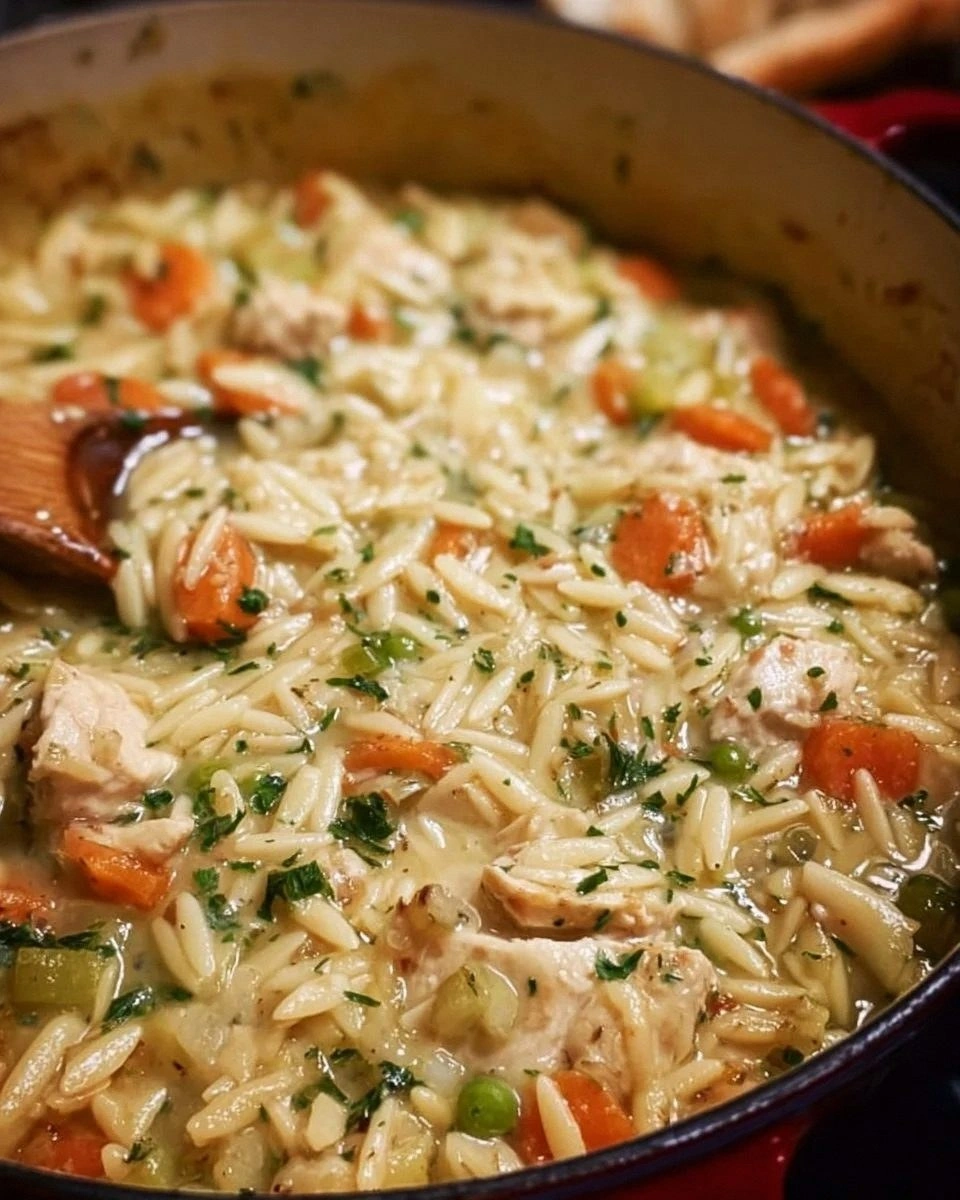
The moment the sauce hit the orzo, it was like watching a silk scarf being draped over a sculpture—smooth, glossy, and impossibly luxurious. The chicken, shredded into delicate ribbons, swam in a broth that smelled of thyme and toasted garlic, while the frozen mixed vegetables added pops of color that reminded me of a painter’s palette. The sizzle of olive oil hitting the pan was a siren song, promising a crispness that would later contrast perfectly with the velvety sauce. You could hear the gentle bubbling, feel the warmth radiating from the pot, and taste the anticipation building with each stir.
Most pot‑pie recipes try to cram everything into a crust, but this version throws the crust out the window and embraces the humble orzo as the star. It’s a clever twist that gives you the comfort of a classic pot pie without the heaviness of pastry, and the orzo’s tiny rice‑like shape soaks up the sauce like a sponge, ensuring every forkful is drenched in buttery goodness. I’ve tried a dozen variations, and I can honestly say this is hands down the best version you’ll ever make at home. If you’ve ever struggled with soggy crusts or watery fillings, you’re not alone—this recipe fixes that problem in one elegant swoop.
But here’s the secret that most cooks miss: a splash of heavy cream added at the very end, which transforms the broth into a sauce that coats the pasta like velvet. I dare you to taste this and not go back for seconds. Let me walk you through every single step — by the end, you’ll wonder how you ever made it any other way.
What Makes This Version Stand Out
- Velvet Texture: The heavy cream creates a sauce that clings to each grain of orzo, delivering a mouthfeel that’s richer than a traditional gravy.
- One‑Pan Simplicity: No need to juggle multiple dishes; everything cooks together, saving you time and cleanup.
- Flavor Depth: Garlic and onion powders add a savory backbone without the fuss of fresh aromatics, while the broth provides umami that feels like a slow‑cooked stew.
- Texture Contrast: The frozen veggies retain a slight bite, preventing the dish from turning into a mushy mess.
- Crowd‑Pleaser: Even the pickiest eaters love the creamy sauce and familiar chicken‑and‑veggie combo.
- Ingredient Flexibility: Swap out chicken for turkey or add a dash of smoked paprika for a smoky twist.
- Make‑Ahead Friendly: This dish reheats beautifully, making it perfect for meal prep or leftovers.
- Seasonal Adaptability: Whether it’s a chilly winter night or a breezy summer evening, the comfort factor stays constant.
Inside the Ingredient List
The Flavor Base
Olive Oil (1 tablespoon): This is the silent hero that awakens the aromatics and gives the dish a subtle fruitiness. If you skip it, you’ll miss that initial “pop” of flavor that signals the start of something delicious. For a richer taste, swap half the oil for butter, but keep an eye on the smoke point. When selecting oil, choose extra‑virgin for the most nuanced flavor profile.
The Texture Crew
Orzo Pasta (1 cup): Orzo’s tiny, rice‑shaped grains are perfect for soaking up the creamy sauce without becoming mushy. If you overcook it, the dish loses its bite; undercook, and you’ll get a gritty mouthfeel. A quick tip: cook the orzo al dente in salted water, then drain and set aside—this ensures it retains its shape when folded into the sauce later. For gluten‑free diners, substitute with quinoa or rice pasta.
The Unexpected Star
Heavy Cream (1 cup): This is the game‑changer that turns a simple broth into a luxurious sauce. The fat content carries the flavors and creates that silky coating we all crave. If you’re watching calories, you can use half‑and‑half, but the sauce won’t be quite as indulgent. When adding cream, lower the heat to prevent scorching; a gentle simmer is all you need.
The Final Flourish
Fresh Parsley (optional garnish): A sprinkle of bright green parsley adds a fresh, herbaceous finish that cuts through the richness. It’s also a visual cue that says “I care about presentation.” If parsley isn’t your thing, try thyme or chives for a different aromatic twist. When chopping, keep the pieces fine so they distribute evenly throughout the dish.
Everything's prepped? Good. Let's get into the real action...
The Method — Step by Step
Heat a large, heavy‑bottomed skillet over medium heat and drizzle in the olive oil. As soon as it shimmers, add the orzo and toast it for 2‑3 minutes, stirring constantly. You’ll hear a gentle nutty crackle—that’s the flavor foundation building. The grains should turn a light golden hue, but not brown; this step is crucial for that toasty depth.
Next, pour in the chicken broth, letting it come to a gentle boil. Reduce the heat to a simmer and cover the pan, allowing the orzo to absorb the liquid for about 8‑10 minutes. Keep an eye on the pot; you want the broth to be mostly absorbed but not completely dry. If it looks too dry, splash in a splash more broth or water.
While the orzo is cooking, in a separate bowl, whisk together the heavy cream, garlic powder, onion powder, salt, and pepper. This mixture should be smooth, with no lumps—think of it as the silk that will later drape over the pasta. Watch Out: If you add the cream to a boiling pot, it can curdle; keep the temperature low and steady.
Watch Out: Adding cream too quickly can cause it to separate. Stir slowly and keep the heat gentle.When the orzo is tender but still has a slight bite, stir in the shredded chicken and frozen mixed vegetables. The vegetables will thaw instantly, releasing a burst of color and a subtle sweetness that balances the savory broth. This is the moment where the dish starts to look like a proper pot pie—creamy, speckled, and inviting.
Now, pour the cream mixture over the skillet contents, stirring constantly. As the sauce thickens, you’ll notice it clinging to each grain of orzo like a glossy coat. Let it simmer for another 3‑4 minutes, allowing the flavors to meld. Taste and adjust seasoning; this is where you can truly make the dish your own.
Turn off the heat and let the pot sit for a minute; the residual warmth will finish cooking the vegetables without overcooking them. Sprinkle fresh parsley over the top for a pop of color and a fresh, herbaceous note that cuts through the richness.
Kitchen Hack: For an extra creamy finish, whisk a tablespoon of butter into the sauce right before serving.Serve the dish hot, directly from the skillet or transfer to a shallow baking dish if you prefer a slightly crisped top. The aroma will fill the kitchen, making everyone wonder what you’ve been cooking. That sizzle when it hits the pan? Absolute perfection.
Enjoy! And remember, I’ll be honest — I ate half the batch before anyone else got to try it. This is the kind of comfort food that makes you want to hug the bowl.
Insider Tricks for Flawless Results
The Temperature Rule Nobody Follows
Keep the heat medium‑low once you add the cream. High heat can cause the dairy to split, ruining that silky texture. I once tried a “quick boil” and ended up with a curdled mess that looked like a science experiment gone wrong. The secret is patience; a gentle simmer lets the sauce thicken evenly.
Why Your Nose Knows Best
Before you taste, trust your nose. When the broth starts to smell like roasted chicken and the vegetables release a sweet earthiness, you know the flavors are marrying. If you catch a faint burnt scent, lower the heat immediately—your nose is a more reliable gauge than a timer.
The 5‑Minute Rest That Changes Everything
After you turn off the stove, let the pot rest for five minutes. This rest period lets the starches in the orzo fully absorb the sauce, resulting in a creamier consistency. Skipping this step is a common mistake that leaves the dish a bit watery.
Seasoning Layers, Not a One‑Shot
Add a pinch of salt at three stages: after the broth is added, after the chicken and veggies go in, and finally after the cream. This layering builds depth without over‑salting. I once added all the salt at once and ended up with a dish that tasted like the ocean.
Garnish with Purpose
Fresh herbs aren’t just for looks; they add a bright, aromatic finish that balances the richness. If you’re feeling adventurous, try a squeeze of lemon juice right before serving to add a subtle zing that lifts the entire dish.
Creative Twists and Variations
This recipe is a playground. Here are some of my favorite ways to switch things up:
Cheesy Crust Finish
After transferring the mixture to a shallow baking dish, sprinkle shredded mozzarella and Parmesan on top, then broil for 2‑3 minutes until bubbly and golden. The cheese adds a crunchy crown that mimics a traditional pot‑pie crust.
Spicy Southwest
Swap the chicken broth for a chipotle‑infused broth, add a teaspoon of smoked paprika, and toss in a handful of corn kernels. Finish with a drizzle of avocado crema for a southwestern flair that’ll surprise your guests.
Herb‑Infused Delight
Replace parsley with fresh thyme and rosemary, and add a splash of white wine when deglazing the pan. The herbs impart an earthy aroma that feels like a stroll through a garden after rain.
Seafood Swap
Use cooked shrimp or scallops instead of chicken, and add a pinch of lemon zest. The seafood version is lighter but just as comforting, perfect for a quick weeknight dinner.
Vegan Version
Swap chicken for roasted chickpeas, use vegetable broth, and replace heavy cream with coconut cream or cashew cream. The result is a plant‑based comfort bowl that still delivers that creamy, velvety texture.
Storing and Bringing It Back to Life
Fridge Storage
Allow the dish to cool to room temperature, then transfer it to an airtight container. It will keep for up to 4 days in the refrigerator. When reheating, add a splash of milk or broth and stir gently over low heat to restore the sauce’s silkiness.
Freezer Friendly
Portion the cooled dish into freezer‑safe bags or containers, leaving a little headspace for expansion. It freezes well for up to 3 months. To reheat, thaw overnight in the fridge, then warm in a saucepan over medium heat, again adding a splash of liquid if needed.
Best Reheating Method
The stovetop is king: place the frozen or refrigerated portion in a skillet, add a tablespoon of water or broth, and stir until the sauce regains its glossy sheen. Microwaving works in a pinch, but the sauce can become unevenly heated.