I burned dinner three times last week trying to perfect this stuffed acorn squash. Not because the recipe is fussy — it’s actually embarrassingly simple — but because I kept “taste-testing” the filling straight from the skillet and forgot the squash was still in the oven. By the third round of charcoal-edged squash boats, I finally admitted I had a problem and set a phone alarm like a responsible adult. The payoff? A dish so ridiculously comforting that my neighbor rang the doorbell at 9 p.m. asking if I was “baking some kind of autumn-scented candle,” then shamelessly begged for a plate. I dare you to taste this and not go back for seconds; I certainly couldn’t, and I’m supposed to be the one with willpower around here.
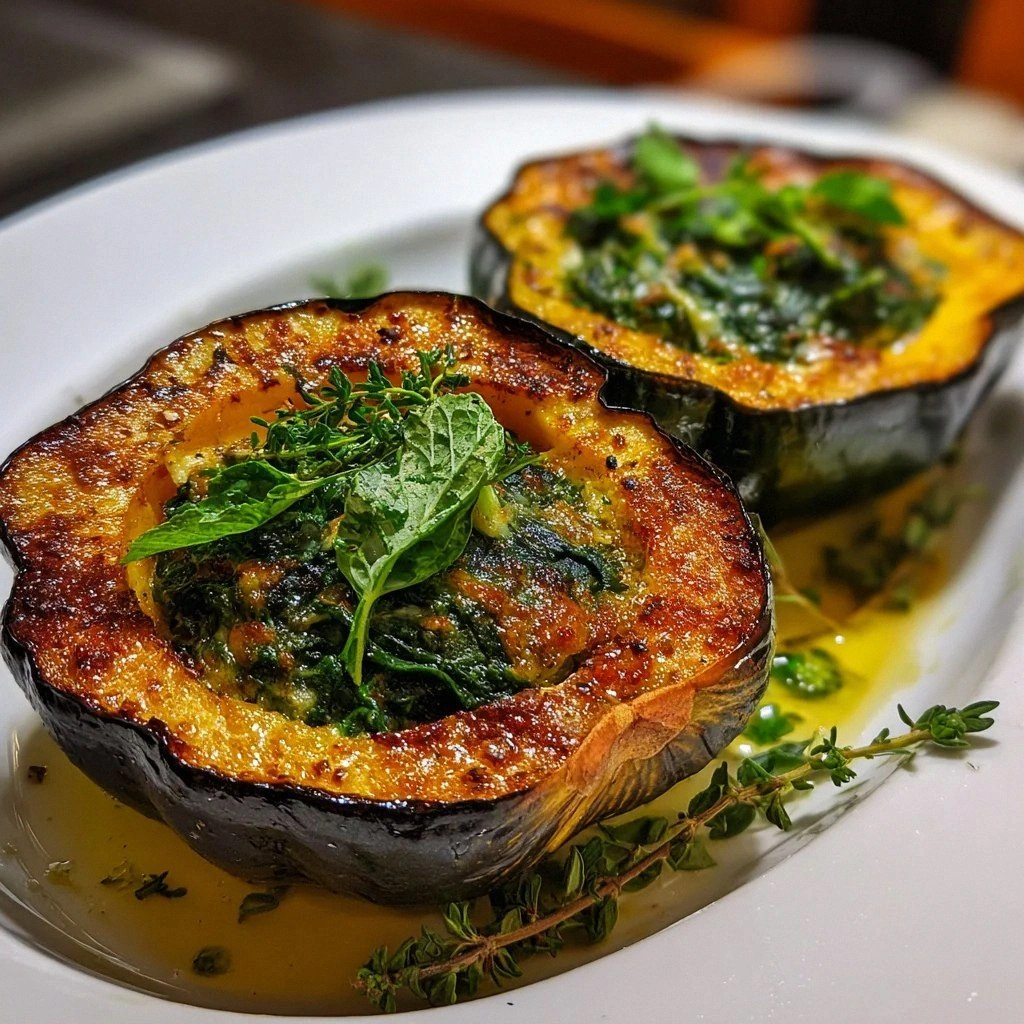
Picture yourself pulling this out of the oven, the whole kitchen smelling like thyme and nutty Parmesan, the squash flesh caramelized at the edges like it spent a spa day in brown-butter sunshine. The filling puffs slightly, a cloud of spinach-flecked cream cheese that melts into every crevice of the squash’s sweet orange flesh. That first forkful is pure autumn theater: hot, creamy, herby, with the squash collapsing into silky threads that remind me of honeyed sweet potatoes but with way more dignity. I’ll be honest — I ate half the batch before anyone else got to try it, standing over the baking sheet in my slippers, fork in one hand, phone in the other, scrolling nothing in particular because my brain had officially gone offline with pleasure.
Most recipes get this completely wrong. They treat the squash like a mere bowl, under-season it, then pile in a stuffing that tastes like someone emptied the fridge. What actually works is coaxing every layer — brushing the cut edges with olive oil so they blister like campfire marshmallows, seasoning the cavity aggressively, and marrying the spinach to cream cheese over gentle heat so the leaves stay bright instead of going murky. Stay with me here — this is worth it. Let me walk you through every single step — by the end, you’ll wonder how you ever made it any other way.
What Makes This Version Stand Out
- Candy-Sweet Edges: We roast cut-side down first, so the natural sugars seal against the pan and create those dark, sticky lacework rims that taste like maple without a drop of maple syrup.
- Spinach That Stays Emerald: A quick sauté with garlic and a splash of water keeps the leaves plump and jewel-toned instead of the sad army-green shreds you usually get.
- Two-Cheese Strategy: Cream cheese for body, Parmesan for salty umami crunch; together they melt into a fondue-like lava that refuses to dry out even on reheat.
- Thyme That Punches Above Its Weight: Fresh thyme leaves fried for thirty seconds in the olive oil bloom and perfume the entire filling — dried can’t even sit at this table.
- Make-Ahead Magic: Roast the squash and mix the filling up to two days ahead; stuff and reheat at 375°F for ten minutes and guests think you’re a wizard.
- Hands-Off Simplicity: Fifteen minutes of active work, then the oven does the heavy lifting while you binge your latest show guilt-free.
Alright, let’s break down exactly what goes into this masterpiece...
Inside the Ingredient List
The Flavor Base
Acorn squash brings a gentle, chestnut-like sweetness that plays beautifully with savory notes. Pick ones that feel heavy for their size and have a matte, deep-green skin with a single blaze of orange on the bottom — that orange patch signals sugar development. If all you find are pale, shiny squash, keep looking; they’ll taste watery and never caramelize. A drizzle of good olive oil not only prevents sticking but also conducts heat so the cut surfaces bronze like a sun-kissed beach. Salt is non-negotiable; without it, the squash tastes flat, like someone watered down autumn.
The Texture Crew
Fresh spinach wilts in seconds and stays silky, whereas frozen spinach can work if you wring it out like a wet sweater, but it will never have that bright pop. Cream cheese needs to be room temperature or you’ll fight ugly lumps; I leave it on the counter while the squash roasts and it’s perfectly spreadable by the time I need it. Parmesan should be freshly grated — the pre-shredded cellulose-coated stuff resists melting and leaves a gritty mouthfeel nobody wants. Fresh thyme is the sleeper hit; its lemon-pepper note lifts all that richness and makes the spinach taste garden-fresh rather than cafeteria-sad.
The Unexpected Star
Black pepper seems basic, but crack it coarsely so little spicy pockets surprise you between creamy bites. If you’re tempted to skip it, remember that pepper anchors the sweet-savory tightrope and keeps the dish from drifting into dessert territory. A final pinch right before serving wakes everything up the same way a splash of cold water wakes your face in the morning.
Everything's prepped? Good. Let's get into the real action...
The Method — Step by Step
- Preheat your oven to 425°F and position a rack in the center. While it heats, lop the squash in half from stem to tip using the sharpest chef’s knife you own — if the knife sticks, gently tap the flat side with a mallet until it breaks free. Scoop out the seeds with a grapefruit spoon; those serrated edges shred the stringy bits faster than anything. Brush the entire cut surface with olive oil, then season aggressively with salt and pepper — the layer should look like a light snowfall, not a dusting of dandruff. Place the halves cut-side down on a parchment-lined sheet so they steam themselves tender while the bottoms turn the color of antique mahogany.
- Slide the tray into the oven and roast for 25 minutes; this is hands-off time so pour yourself a mug of something warm and set a timer. While the squash works, heat a skillet over medium and add a glug of oil. When it shimmers like a summer mirage, tumble in the fresh thyme leaves and let them sizzle for thirty seconds — that herby popcorn aroma is your cue. Add the spinach in big, fluffy handfuls, wilting each batch before the next goes in; if the pan looks dry, splash in a tablespoon of water to create a quick steam bath that keeps everything emerald.
- Off the heat, stir the cream cheese into the hot spinach so the residual warmth melts it into a velvety cloak. Fold in half the Parmesan; the rest will rain over the top later for a bronzed crust. Taste the filling here — it should make you close your eyes involuntarily and hum. If it doesn’t, add another pinch of salt; under-seasoned filling is the number-one reason people claim squash is boring.
- After 25 minutes, flip the squash halves over with tongs — they should release easily and the surface should be blistered like a perfectly toasted marshmallow. Reduce the oven to 375°F, because the second roast is all about marrying flavors, not browning warfare. Spoon the spinach mixture into each cavity, mounding it like proud snowdrifts, then shower the remaining Parmesan over the top. Return to the oven for 12–15 minutes, just until the cheese freckles gold and the edges bubble.
- Let the squash rest for five minutes; this brief pause allows the filling to settle so it doesn’t slosh onto your plate like a runny omelet. Garnish with extra thyme leaves for color and a final crack of pepper for attitude. Serve hot, ideally in shallow bowls that cradle the halves so your guests can scoop without chasing them across the plate like runaway boats.
That's it — you did it. But hold on, I've got a few more tricks that'll take this to another level...
Insider Tricks for Flawless Results
The Temperature Rule Nobody Follows
Room-temperature dairy is non-negotiable. Cold cream cheese refuses to meld and leaves white freckles in the spinach. Leave it on the counter while the squash roasts; by the time you need it, it spreads like frosting. Same goes for Parmesan — grate it fresh and let it breathe so the moisture evaporates and it melts silkily instead of clumping like wet sand.
Why Your Nose Knows Best
Trust aroma checkpoints more than timers. When the thyme hits hot oil, you should get a lemon-pepper perfume that drifts across the kitchen. If you smell nothing, your oil isn’t hot enough; if it smells bitter, you scorched the herbs and need to start over. That fragrance carries through the whole dish, so don’t skip the thirty-second fry.
The 5-Minute Rest That Changes Everything
After the second bake, resist the siren call of instant gratification. Five short minutes lets the cheese set so the filling doesn’t slide off like an avalanche when you cut in. Cover loosely with foil if your kitchen is drafty, but don’t seal it or you’ll steam away the crispy Parmesan peaks you worked so hard for.
Creative Twists and Variations
This recipe is a playground. Here are some of my favorite ways to switch things up:
Mediterranean Detour
Swap thyme for oregano and fold in sun-dried tomatoes and crumbled feta. The tomatoes’ tang plays off the squash’s sweetness like a sunset over Santorini. Finish with a drizzle of balsamic reduction for sticky glamour.
Smoky Bacon Upgrade
Render two strips of bacon until crisp, use the fat instead of olive oil to wilt the spinach, then crumble the bacon on top before serving. The smoky pork clouds mingle with the cream cheese like they were born to be together.
Spicy Southwest
Add a pinch of smoked paprika and a handful of pickled jalapeños to the filling. Substitute pepper Jack for half the Parmesan so you get a gentle lava pull of heat that sneaks up after the third bite.
Vegan Power Play
Trade cream cheese for vegan cream cheese and use nutritional yeast instead of Parmesan. The yeast adds a nutty, cheesy depth without dairy, and nobody will miss the original once they taste the umami bomb.
Holiday Glam
Stir in dried cranberries and toasted pecans for ruby jewels and crackly crunch. It tastes like Thanksgiving got a sophisticated makeover and ditched the marshmallows.
Storing and Bringing It Back to Life
Fridge Storage
Cool the halves completely, then nestle them in an airtight container cut-side up. They’ll keep for four days without the filling drying out. If you plan to reheat within 24 hours, you can leave them stuffed; longer than that, store the filling separately so the squash doesn’t absorb moisture and go soggy.
Freezer Friendly
Wrap each cooled half tightly in plastic wrap, then foil, and freeze for up to two months. Thaw overnight in the fridge before reheating. The texture softens slightly, but the flavor stays intact and makes for heroic weeknight dinners.
Best Reheating Method
Skip the microwave unless you like rubber squash. Instead, place halves in a baking dish with a tablespoon of water in the bottom, cover with foil, and warm at 350°F for 15 minutes. Remove the foil for the last five to re-crisp the cheese crown. Add a tiny splash of water before reheating — it steams back to perfection without turning the filling gloopy.