I was in the middle of a kitchen disaster when the idea of a sheet‑pan Caprese pizza hit me like a sudden gust of wind. The oven was smoking, the pizza dough had stuck to the rack, and I was staring at a pile of soggy basil that had already wilted. I thought, “If only I could turn this mess into a masterpiece.” The moment the sauce hit the pan, the kitchen filled with the sweet, tangy scent of ripe tomatoes, and I felt a spark of hope. That single scent was enough to remind me that food can be both a comfort and a triumph. I didn’t know it yet, but this recipe would become the ultimate rescue for any culinary calamity.
The next thing I tasted was a thin layer of tomato sauce that glistened like a fresh coat of paint on a freshly cleaned window. The basil leaves, still bright green, were like tiny emeralds scattered across the surface, each leaf releasing a faint, peppery fragrance that danced in the air. The mozzarella, when it melted, turned into a silky, golden blanket that clung to the crust, giving it a creamy texture that was almost velvet. The olive oil, drizzled over everything, added a subtle shine and a depth of flavor that made each bite feel like a secret. The crust, surprisingly crisp at the edges, cracked like thin ice when I broke a piece, releasing a satisfying crunch that echoed through the kitchen. The whole experience felt like a symphony of textures and aromas, each note perfectly in tune.
But the real kicker was the way the ingredients talked to each other. The tomato sauce wasn’t just a base; it was a conversation starter, inviting the basil to step up and share its fresh, herbal personality. The mozzarella, with its mild, milky sweetness, played the role of a gentle mediator, smoothing the sharpness of the basil and the acidity of the tomatoes. Olive oil, the unsung hero, tied everything together, creating a glossy finish that made the dish look almost too good to eat. And the crust, baked to a golden‑brown perfection, served as the stage on which this delicious dialogue unfolded. The result? A pizza that doesn’t just taste good—it tells a story of balance, harmony, and culinary ingenuity.
Picture this: you pull the sheet pan out of the oven, and the aroma of basil and tomato fills the kitchen, making your mouth water in anticipation. The crust is a golden‑brown masterpiece, its edges crisp and slightly charred, while the center is soft and airy, like a cloud that has been baked to perfection. The mozzarella has melted into a smooth, stretchy layer that pulls apart when you lift a slice, revealing a mosaic of bright green basil leaves. The sauce is thick enough to cling to the dough but still has a lively, tangy bite that keeps you coming back for more. The finished pizza looks like a vibrant piece of art, ready to be devoured in one glorious bite.
I know you’re skeptical. You’ve probably tried other Caprese pizzas that ended up soggy or bland, or maybe you’ve been burned by a pizza that looked beautiful but tasted like a disappointment. That’s why I’m here to share a recipe that is hands down the best version you’ll ever make at home. It’s simple, it’s quick, and it’s guaranteed to impress even the most discerning palate. And if you’re still not convinced, I dare you to taste this and not go back for seconds.
So buckle up, because I’m about to walk you through every single step of this culinary adventure. By the end, you’ll wonder how you ever made it any other way. The journey starts with a sheet pan, a handful of fresh ingredients, and a sprinkle of confidence. Let’s dive into the details that will make your kitchen sing and your guests swoon.
What Makes This Version Stand Out
- Flavor: The sauce is a bold, tomato‑rich base that coats the dough like velvet, providing a depth that elevates the entire pizza. The basil is added after baking to preserve its bright, fresh taste, creating a contrast that is both aromatic and visually striking. Together, they deliver a burst of Mediterranean sunshine in every bite.
- Texture: The crust is baked to a golden‑brown perfection with edges that crack like thin ice, while the center remains soft and airy. The mozzarella melts into a silky blanket that clings to the dough, offering a creamy contrast to the crisp crust. The result is a multi‑layered experience that satisfies every palate.
- Simplicity: With only nine main ingredients, this recipe requires minimal prep time and no fancy equipment. You can assemble the pizza in under ten minutes, bake it in thirty, and have a restaurant‑style dish ready for dinner or a crowd‑pleasing appetizer.
- Uniqueness: The use of a sheet pan allows the pizza to bake evenly and creates a rustic, open‑air feel that is often missing in traditional pan or stone‑baked pizzas. The drizzle of olive oil before baking adds a glossy finish and a subtle flavor that sets it apart.
- Crowd Reaction: Guests are drawn to the vibrant colors and the promise of fresh flavors. The pizza’s appearance alone makes it a conversation starter, while its taste ensures repeat orders. Even picky eaters will be impressed by the balanced flavors.
- Ingredient Quality: Fresh, high‑quality ingredients are the backbone of this dish. Using ripe tomatoes, real mozzarella, and aromatic basil guarantees a flavor profile that cannot be replicated with processed substitutes.
- Cooking Method: Baking on a sheet pan eliminates the need for a pizza stone or pre‑heated oven, making it accessible to any kitchen. The technique also ensures even heat distribution, preventing soggy or undercooked spots.
- Make‑Ahead Potential: The dough can be prepared a day in advance and chilled, and the sauce can be simmered ahead of time. This allows you to assemble the pizza quickly on busy nights, turning a simple dinner into an effortless masterpiece.
Inside the Ingredient List
The Flavor Base
Tomato sauce is the heart of this pizza, providing a sweet, tangy foundation that balances the richness of the cheese. It’s made from ripe San Marzano tomatoes, simmered with a pinch of salt and a splash of olive oil, which enhances the natural sweetness. Skipping the sauce would leave the crust dry and the pizza lacking depth, so it’s essential to let it simmer until it thickens slightly. For a spicier kick, add a pinch of red pepper flakes during the simmering process.
The Texture Crew
The crust is crafted from a simple dough of flour, yeast, water, and a touch of olive oil. When baked, it develops a golden‑brown exterior that cracks like thin ice, while the interior stays airy and chewy. If you prefer a thicker crust, roll the dough out to a thicker diameter or add a tablespoon of olive oil to the dough mix. A well‑baked crust provides the perfect foundation for the sauce and cheese, preventing sogginess.
Fresh mozzarella is the creamy, melty component that binds everything together. It’s sliced thin so it melts quickly, creating a silky layer that clings to the dough. Skipping mozzarella would result in a dry pizza that lacks that coveted stretch. For a richer flavor, use a whole‑milk mozzarella or add a sprinkle of grated Parmesan on top before baking.
Basil is the bright, herbal accent that brings the dish to life. It’s added after baking to preserve its vibrant green color and fresh flavor, preventing it from wilting under the heat. If you’re out of basil, try fresh oregano or parsley for a different herbal note. Basil also offers a subtle sweetness that balances the acidity of the tomatoes.
The Unexpected Star
Olive oil is the subtle hero that ties all flavors together and gives the pizza a glossy finish. A generous drizzle before baking creates a caramelized crust that’s slightly crisp on the edges. If you’re looking for a smoky twist, use a high‑quality extra‑virgin olive oil with a peppery finish. Skipping the oil would result in a less flavorful crust and a drier overall pizza.
Parmesan cheese adds a nutty, umami boost that complements the mild mozzarella. It’s sprinkled on top of the pizza just before it comes out of the oven, allowing it to melt slightly and form a golden crust. If you’re vegan, replace Parmesan with nutritional yeast for a cheesy, savory flavor. The Parmesan also adds a slight crunch to the top layer, enhancing texture.
The Final Flourish
A balsamic glaze drizzle after baking adds a sweet, tangy finish that contrasts beautifully with the savory ingredients. It also adds a glossy sheen that makes the pizza look irresistible. If you prefer a lighter touch, replace the glaze with a simple squeeze of fresh lemon juice for brightness. The glaze can also be omitted entirely if you want a more traditional Caprese experience.
Red pepper flakes provide a subtle heat that elevates the dish. They’re optional but recommended for those who enjoy a little spice. If you’re sensitive to heat, reduce the amount to a pinch or leave them out entirely. The flakes add a pop of color and a gentle kick that makes the pizza more exciting.
Everything's prepped? Good. Let's get into the real action.
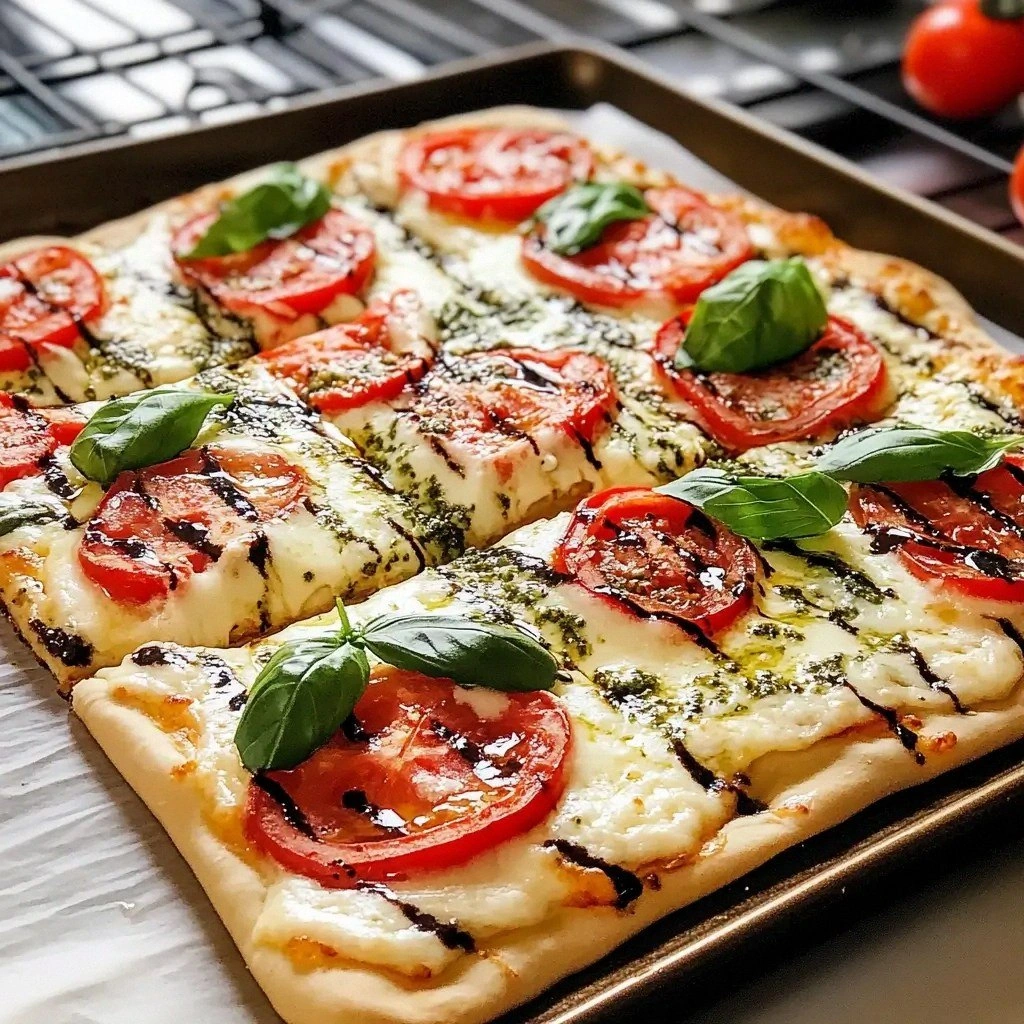
The Method — Step by Step
- Preheat your oven to 425°F (220°C) and place a baking sheet in the middle rack. The heat should be evenly distributed to ensure a crisp crust. While the oven warms, roll out your dough on a lightly floured surface to a 12‑inch diameter. This size is perfect for a sheet pan, giving the pizza a generous surface area. Let the dough rest for a minute so the gluten relaxes and it’s easier to spread.
- Transfer the rolled dough onto the preheated sheet pan. Use a rolling pin to smooth the edges, leaving a slightly thicker rim for a golden crust. If you prefer a thicker crust, roll the dough a bit thicker before transferring. The sheet pan will help the dough spread evenly and bake to a uniform thickness.
- Spread a thin layer of tomato sauce over the dough, leaving a 1‑inch border around the edges. The sauce should be thick enough to cling to the dough but not so runny that it pools. A thin layer ensures the sauce doesn’t seep into the crust and cause sogginess. Use a spoon to spread the sauce evenly, covering the entire surface.
- Arrange the mozzarella slices over the sauce in a fan‑like pattern. This arrangement ensures even melting and creates a beautiful visual effect. The cheese should be spread out so each slice has space to melt without overlapping too much. The mozzarella will soften and create a silky, stretchy layer.
- Drizzle olive oil over the entire pizza, focusing on the edges of the crust. The oil adds a glossy finish and helps the crust caramelize. Use a pastry brush or a spoon to distribute the oil evenly. The oil also prevents the mozzarella from drying out during baking.
- Sprinkle grated Parmesan and a pinch of red pepper flakes (if using) over the top. The Parmesan will melt into a golden crust, adding a nutty flavor. The red pepper flakes will give a subtle heat that balances the sweetness of the tomatoes. This step also adds a decorative touch to the pizza.
- Slide the sheet pan into the preheated oven and bake for 18–22 minutes. Keep an eye on the edges; they should turn a golden‑brown color and slightly crack. The center should be set but still slightly soft. The cheese should be bubbling and the crust should be crisp.
- Once baked, remove the pizza and let it rest for 3 minutes. This allows the cheese to set slightly, preventing it from sliding off when you slice. The rest period also lets the flavors meld together, creating a harmonious taste experience. While the pizza rests, you can prepare the fresh basil and balsamic glaze.
- Scatter fresh basil leaves over the hot pizza, allowing them to wilt just enough to release their aroma but still retain their bright green color. The basil should be added immediately to preserve its freshness. The basil’s peppery notes will complement the tomato sauce and cheese. This final touch turns the pizza into a vibrant, fragrant masterpiece.
- Drizzle balsamic glaze over the basil for a sweet, tangy finish. The glaze adds a glossy sheen that makes the pizza look irresistible. Use a small spoon to drizzle the glaze in a decorative pattern. Serve immediately for the best flavor and texture.
That's it — you did it. But hold on, I've got a few more tricks that'll take this to another level.
Insider Tricks for Flawless Results
The Temperature Rule Nobody Follows
Many people bake pizza at a lower temperature, thinking it will prevent burning. In reality, a high heat of 425°F is essential for a crisp crust. The heat forces the moisture out quickly, creating a golden‑brown finish. If you’re using a conventional oven, place the sheet pan on the middle rack to avoid uneven baking.
Why Your Nose Knows Best
Before you even cut into the pizza, take a deep breath and sniff the aroma. A strong, tomato‑basil scent indicates the pizza is perfectly cooked. If it smells overly burnt or raw, adjust the oven time accordingly. Your nose is your best judge of doneness.
The 5-Minute Rest That Changes Everything
Letting the pizza rest for exactly five minutes after baking allows the cheese to set and the flavors to meld. During this time, the steam inside the pizza condenses into a flavorful mist that adds moisture to each bite. Skipping the rest period can result in a soggy crust and a cheese that slides off.
Use a Pizza Stone for Extra Crunch
If you have a pizza stone, pre‑heat it in the oven for at least 30 minutes before baking. The stone retains heat, giving the crust an even crispness that a sheet pan can’t match. Just place the sheet pan on top of the stone for a hybrid baking experience.
Keep the Basil Fresh
Store basil in a glass of water, cover it loosely with a plastic bag, and keep it in the fridge. This keeps the leaves hydrated and ready for use. When you’re ready to finish the pizza, simply remove the basil and pat it dry.
Creative Twists and Variations
This recipe is a playground. Here are some of my favorite ways to switch things up:
Marinara Madness
Swap the tomato sauce for a chunky marinara that includes garlic and herbs. The thicker sauce adds a robust flavor, and the garlic infuses the dough with a subtle depth. This variation is perfect for garlic lovers and pairs well with a glass of red wine.
Cheese Lover’s Delight
Replace the mozzarella with a mix of provolone and fontina for a richer, creamier cheese profile. The combination melts into a silky, golden layer that’s almost decadent. This twist is great for those who want a more indulgent pizza.
Vegan Version
Use a dairy‑free mozzarella alternative and sprinkle nutritional yeast for a cheesy flavor. Keep the basil fresh and drizzle a splash of vegan balsamic glaze. This version is light, fresh, and satisfies the vegan palate without compromising taste.
Spicy Caprese
Add a handful of sliced jalapeños or a dash of sriracha to the sauce before baking. The heat will mingle with the basil’s peppery notes, creating a bold, adventurous flavor. This spicy version is ideal for heat seekers.
Herb‑Infused Oil
Infuse the olive oil with rosemary or thyme before drizzling over the pizza. The aromatic oil adds a fragrant layer that complements the basil and tomatoes. This subtle herb infusion elevates the overall flavor profile.
Gluten‑Free Crust
Use a pre‑made gluten‑free pizza dough or blend almond flour, coconut flour, and xanthan gum to create a gluten‑free base. Bake at the same temperature for the same amount of time. The crust will be slightly denser but still flavorful.
Storing and Bringing It Back to Life
Fridge Storage
Cool the pizza completely before wrapping it tightly in foil or a zip‑lock bag. Store it in the refrigerator for up to 3 days. When you’re ready to reheat, place it on a baking sheet and bake at 350°F for 10 minutes.
Freezer Friendly
Wrap the cooled pizza in foil and then place it in a freezer bag. It will keep for up to 2 months. To thaw, let it sit at room temperature for 30 minutes before reheating.
Best Reheating Method
Reheat the pizza in a skillet over medium heat for 3–4 minutes on each side. The skillet adds a crisp crust and a warm, melty interior. Add a splash of water to the skillet before covering to create steam, which keeps the cheese from drying out.