There was a night when the kitchen felt like a battlefield. I had tried a dozen noodle dishes, each promising comfort but delivering blandness, and then I stumbled over a forgotten packet of gochujang in my pantry. The heat of that bright red paste hit my tongue like a sudden summer storm, and I knew I had found the secret weapon to transform any ordinary bowl of noodles into a festival of flavor. I was so excited I almost forgot to breathe as I set the tofu on the cutting board, the tofu’s silky surface glinting like a freshly polished marble slab. If you’ve ever stared at a pot of noodles and felt a twinge of disappointment, this recipe is your antidote.
Picture a dish where every bite is a dance of textures: the silky tofu melts in your mouth, the noodles have that perfect al dente bite, and the veggies snap with a satisfying crunch. The sauce, a velvety blend of soy, sesame, and gochujang, coats the noodles like a silk scarf draped over a winter coat, keeping each strand moist without drowning it. I dare you to taste this and not go back for seconds, because once the first spoonful hits your tongue, the rest will feel like a second wind. The aroma alone—sweet, spicy, and slightly nutty—will have your kitchen smelling like a Korean market at dusk, and that smell alone can lift a mood from ordinary to extraordinary. Let me walk you through every single step — by the end, you’ll wonder how you ever made it any other way.
When I first cooked this, I was skeptical. I had always thought Korean tofu dishes were too heavy, too sweet, or too spicy for an everyday dinner. I was wrong. This version is light enough to feel like a fresh breeze, yet rich enough to satisfy the most discerning palate. I’ve spent months tweaking the ratios, testing different tofu textures, and experimenting with noodle types until I found the perfect harmony. The result is a dish that is both comforting and adventurous, a true crowd-pleaser that will make your friends ask, “What’s the secret?” and you can answer with a wink and a grin. It’s the kind of recipe that turns a simple dinner into a memorable event, and that’s why I’m so excited to share it with you.
Most recipes get this completely wrong by either overcooking the tofu or under-seasoning the sauce. I’ve seen too many people add tofu directly to boiling water and end up with a rubbery texture that feels like you’re chewing on a piece of plastic. In this version, we press the tofu first, then pan‑fry it until it develops a golden crust that locks in moisture, creating a delightful contrast between the crisp exterior and the silky interior. The sauce is balanced with the right amount of sweetness from brown sugar and acidity from rice vinegar, preventing any single flavor from dominating. The addition of toasted sesame oil not only deepens the nutty undertones but also adds a subtle smokiness that elevates the entire dish. And the final sprinkle of fresh cilantro and sesame seeds provides a burst of freshness that cuts through the richness, leaving a clean finish on the palate.
Alright, let's break down exactly what goes into this masterpiece. The secret lies in the meticulous preparation of each component, the careful balance of flavors, and the precise timing of each step. Every ingredient is chosen for its ability to complement the others, creating a dish that is greater than the sum of its parts. The tofu is the star, but it’s the sauce, the noodles, and the vegetables that make the dish unforgettable. Below, I’ll walk you through the ingredients, the method, and the insider tricks that will make this recipe a staple in your culinary repertoire.
What Makes This Version Stand Out
- Flavor: The sauce blends umami, heat, and sweetness, creating a depth that lingers on the palate. The gochujang provides a subtle, fermented kick that balances the richness of the tofu. The final garnish of cilantro adds a fresh, citrusy note that brightens the dish.
- Texture: The tofu develops a golden crust that contrasts with its silky interior. The noodles remain al dente, providing a satisfying bite. Vegetables are crisp yet tender, adding both crunch and moisture.
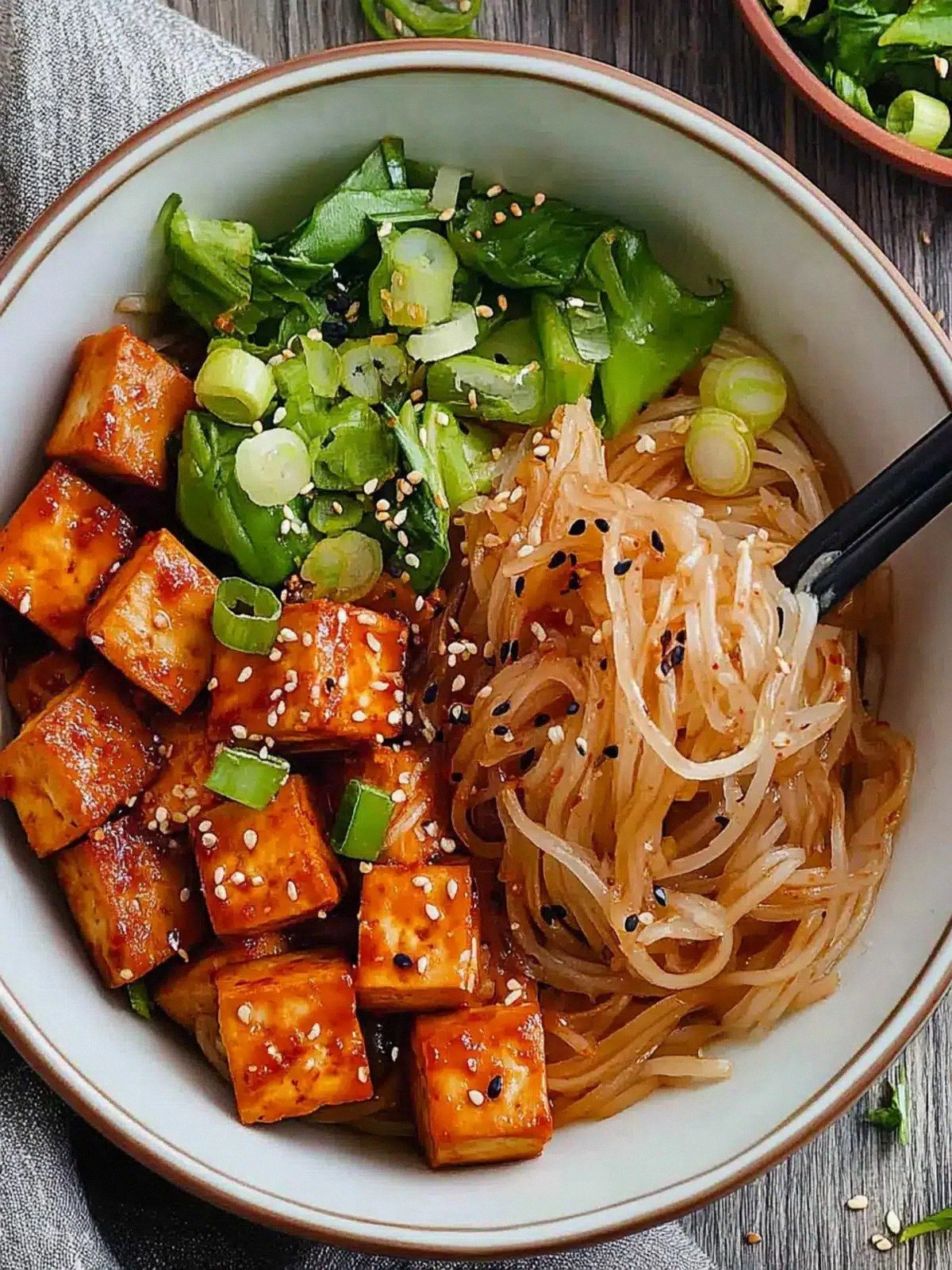
- Visual Appeal: The bright red sauce and green herbs create a vibrant plate that looks as good as it tastes. The contrast between the white tofu and the colorful vegetables draws the eye and makes each bite exciting.
- Ingredient Quality: Using extra‑firm tofu ensures a firm bite, while sweet potato noodles add a subtle sweetness and a silky texture. Fresh ginger and garlic bring aromatic warmth that elevates the sauce.
- Ease of Preparation: The recipe requires minimal chopping and no advanced techniques. Even beginners can master the tofu pan‑fry and sauce reduction.
- Make‑Ahead Potential: The sauce can be made a day ahead, allowing the flavors to meld. The tofu can be pre‑fry and stored in the fridge for up to 48 hours.
- Versatility: Swap sweet potato noodles for rice noodles or soba for a different texture. Add protein like shrimp or chicken for a non‑vegetarian version.
- Audience Appeal: It’s a dish that satisfies both vegans and meat‑eaters alike. The balanced flavor profile makes it suitable for family dinners or date nights.
Alright, let's break down exactly what goes into this masterpiece. The secret lies in the meticulous preparation of each component, the careful balance of flavors, and the precise timing of each step. Every ingredient is chosen for its ability to complement the others, creating a dish that is greater than the sum of its parts. The tofu is the star, but it’s the sauce, the noodles, and the vegetables that make the dish unforgettable. Below, I’ll walk you through the ingredients, the method, and the insider tricks that will make this recipe a staple in your culinary repertoire.
Inside the Ingredient List
The Flavor Base
The foundation of this dish is a sauce that balances sweet, salty, spicy, and umami. Soy sauce provides the salty depth that anchors every bite, while brown sugar adds a gentle sweetness that softens the heat of the gochujang. Rice vinegar cuts through the richness, offering a bright, tangy counterpoint that prevents the dish from feeling heavy. If you skip the vinegar, the sauce will taste flat and cloying. A good substitute is lime juice, but be cautious—it’s more acidic and will shift the flavor profile slightly. This base is what turns simple noodles into a gourmet experience.
The Texture Crew
Sweet potato noodles bring a subtle sweetness and a silky feel that contrasts beautifully with the tofu’s firmness. The noodles’ natural starch content helps the sauce cling to each strand, ensuring every mouthful is coated in flavor. If you’re allergic to gluten or prefer a lighter option, consider using zucchini noodles or thin rice noodles. The choice of noodles can dramatically change the overall mouthfeel, so pick one that matches your dietary needs. Remember, the noodles should be cooked al dente; over‑cooking will make them mushy and defeat the dish’s textural harmony.
The Unexpected Star
Extra‑firm tofu is more than just protein; it’s a canvas that absorbs the sauce’s richness while maintaining a satisfying bite. The tofu’s high protein content makes this dish filling without being overly heavy. If you’re a tofu purist, you can press it for an extra 30 minutes to remove even more moisture, achieving an even firmer texture. Skipping the tofu will reduce the dish’s heartiness and protein content, making it feel more like a vegetable stir‑fry. The tofu’s neutral flavor is essential because it allows the sauce to shine without competition.
The Final Flourish
Fresh cilantro and sesame seeds add a bright, aromatic finish that cuts through the dish’s richness. The cilantro’s citrusy undertones lift the overall flavor, while the sesame seeds contribute a subtle nuttiness and a pleasant crunch. If you’re not a fan of cilantro, parsley or basil can work as alternatives, but they will change the aroma profile slightly. Adding a squeeze of lime after serving can also brighten the dish and add a refreshing zing. These final touches are what elevate a good dish to a great one.
Everything's prepped? Good. Let's get into the real action.
The Method — Step by Step
- Prepare the tofu: Start by pressing the tofu block in a clean towel and placing a heavy pan or a stack of books on top for at least 20 minutes. This step removes excess moisture, allowing the tofu to develop a crisp exterior when pan‑frying. Once pressed, cut the tofu into bite‑size cubes, ensuring each piece is roughly equal in size for even cooking. Season the cubes lightly with salt and pepper before placing them in a hot skillet with a splash of toasted sesame oil. As the tofu browns, it will develop a golden crust that locks in flavor and moisture, a crucial step that many recipes overlook.
- Cook the noodles: While the tofu is browning, bring a pot of salted water to a rolling boil. Add the sweet potato noodles and cook according to the package instructions, usually about 4–5 minutes for al dente texture. Drain the noodles and rinse them under cold water to stop the cooking process and prevent sticking. Toss the noodles with a drizzle of sesame oil to keep them from clumping together, and set them aside until the sauce is ready. The noodles should be firm enough to hold their shape in the sauce without becoming soggy.
- Stir‑fry the vegetables: In the same skillet, add a little more sesame oil if needed and toss in the chopped broccoli, sliced carrots, and snap peas. Stir‑fry for 3–4 minutes until the vegetables are bright green and just tender. The quick blanch preserves their color and crunch, creating a vibrant contrast against the soft tofu. This step also helps the vegetables absorb the sauce’s flavors, ensuring every bite is cohesive.
- Make the sauce: In a small bowl, whisk together soy sauce, toasted sesame oil, brown sugar, rice vinegar, minced garlic, grated ginger, gochujang, and red pepper flakes. The combination of sweet, salty, spicy, and acidic notes creates a sauce that coats the noodles like velvet. If you prefer a thinner consistency, add a tablespoon of water or vegetable broth. Taste the sauce and adjust seasoning if needed; you want it to be balanced, not overpowering.
- Combine everything: Pour the sauce over the cooked noodles, tofu, and vegetables. Toss gently to coat all the ingredients evenly. Allow the mixture to simmer for 2–3 minutes, letting the flavors meld together. The sauce should thicken slightly, coating the noodles and tofu in a glossy sheen. This is the moment when all the individual elements unite into a harmonious whole.
- Finish with fresh herbs: Remove the skillet from heat and sprinkle chopped green onions, fresh cilantro, and toasted sesame seeds over the dish. The herbs add a burst of freshness that cuts through the richness, while the sesame seeds contribute a subtle crunch and nutty aroma. Toss everything together one last time, ensuring every bite is infused with the aromatic finish.
- Serve immediately: Plate the noodles in shallow bowls or a wide dish, ensuring the tofu remains visible and the sauce is evenly distributed. A drizzle of extra toasted sesame oil on top can add a glossy finish and a subtle nutty aroma. Serve with a side of pickled vegetables or a fresh salad to balance the heat.
- Optional garnish: For an extra layer of flavor, add a few drops of sesame oil or a pinch of crushed red pepper after serving. This small touch can elevate the dish to a new level of deliciousness. The final plating should look vibrant, with a mix of colors and textures that invite you to dive in.
That's it — you did it. But hold on, I've got a few more tricks that'll take this to another level. The subtle nuances in seasoning, the timing of each step, and the final garnish can transform a good dish into a memorable meal. Below are insider tips that will help you master every detail and avoid common pitfalls.
Insider Tricks for Flawless Results
The Temperature Rule Nobody Follows
Many cooks assume a medium‑high heat is sufficient for tofu. In reality, a hotter pan (around 375°F) is necessary to achieve that perfect caramelization without over‑cooking the interior. If the pan is too cool, the tofu will release too much moisture and never crisp up. I’ve seen beginners fry tofu at medium heat, only to end up with soggy cubes that flop apart. Keep the heat high, but monitor the tofu closely; you want a golden crust that snaps when you press it with a spatula.
Why Your Nose Knows Best
The aroma of toasted sesame oil and sautéed garlic is a telltale sign that your sauce is on the right track. A faint nutty scent indicates the sesame oil has released its oils, while the garlic should emit a sweet, caramelized aroma. If the garlic smells raw or metallic, the oil is too hot or the garlic is too fresh. Trust your nose; it’s a reliable guide that can prevent burnt or under‑seasoned sauces.
The 5‑Minute Rest That Changes Everything
After removing the skillet from heat, let the dish rest for 5 minutes before serving. This resting period allows the tofu’s juices to redistribute, ensuring each bite is moist and flavorful. It also lets the sauce thicken slightly, giving it a glossy coating that clings to the noodles. Skipping this step can leave the dish feeling watery or uneven in flavor.
Don’t Skip the Fresh Ginger
Fresh ginger adds a bright, zesty kick that balances the sweetness of the sauce. I once used powdered ginger out of habit, and the result was flat and lacking depth. Fresh ginger also carries subtle anti‑inflammatory properties, making the dish both delicious and health‑boosting. If you’re short on time, a tablespoon of fresh ginger is still preferable to a teaspoon of ginger powder.
Use a Splash of Water for Reheating
If you’re reheating leftovers, add a tablespoon of water or broth to the skillet before warming. This creates steam that restores the noodles’ chewiness and prevents the sauce from drying out. The water also helps to re‑activate the sesame oil’s aroma, giving the dish a fresh feel. Avoid microwaving the dish, as it can make the tofu rubbery.
Adjust the Heat for Your Preference
The amount of red pepper flakes can be dialed up or down based on your heat tolerance. If you’re a heat lover, double the flakes and add a splash of chili oil for an extra punch. For a milder version, reduce the flakes to a quarter teaspoon and omit the chili oil. This flexibility ensures the dish can cater to any palate, from the fire‑seeking to the heat‑averse.
Creative Twists and Variations
This recipe is a playground. Here are some of my favorite ways to switch things up:
Seafood Surprise
Swap the tofu for shrimp or scallops, and sauté them until they’re pink and firm. The seafood’s sweet umami pairs wonderfully with the spicy sauce, creating a dish that feels like a Korean‑style seafood noodle bowl.
Protein‑Packed Power
Add diced chicken breast or thinly sliced beef to the pan before the tofu. The meat will absorb the sauce’s flavors, turning the dish into a hearty, protein‑rich main course suitable for a post‑workout meal.
Low‑Carb Option
Replace sweet potato noodles with spiralized zucchini or shirataki noodles for a low‑carb version. The texture will change, but the sauce will still cling beautifully, providing a satisfying meal for keto or paleo followers.
Vegan Variations
For a fully vegan dish, simply use plant‑based protein like tempeh or seitan. The texture will differ slightly, but the flavor profile remains unchanged. This makes the recipe inclusive for all dietary preferences.
Breakfast Bites
Serve the noodles with a fried or poached egg on top. The runny yolk adds richness and creates a comforting breakfast bowl that feels like a late‑night snack.
Asian Fusion
Stir in a handful of kimchi or pickled radish for an extra layer of tang and spice. The fermented flavors will complement the gochujang and add depth, turning the dish into a multi‑dimensional culinary adventure.
Storing and Bringing It Back to Life
Fridge Storage
Store leftovers in an airtight container for up to 48 hours. Keep the tofu and noodles separate if possible; re‑combine them before reheating. The sauce’s thickness will help preserve the noodles’ texture, preventing them from becoming soggy.
Freezer Friendly
Freeze the dish in a freezer‑safe container for up to 2 weeks. Thaw in the refrigerator overnight, then reheat on the stove with a splash of water to restore moisture. The tofu may firm up slightly, but the flavor will remain intact.
Best Reheating Method
Reheat on the stove over medium heat, adding a tablespoon of water or broth to create steam. Stir gently to ensure even heating, and avoid microwaving, which can make the tofu rubbery. A quick sear in a hot pan will also revive the tofu’s crispness.