Picture this: it’s a bitterly cold Tuesday night, the wind howls outside like a pack of wolves, and you’ve just burned the last batch of store‑bought hot chocolate because you forgot to stir it in time. I was standing in my kitchen, staring at a charred mess, and I swore I’d never attempt a warm drink again. Then, out of sheer desperation and a dare from a friend who claimed “nothing beats a good mulled wine,” I grabbed the nearest bottle of red, a handful of spices, and went to town. The result? A liquid hug that wrapped around my throat, a scent that made the whole house feel like a cozy chalet, and a taste so comforting I could hear the snow outside melt a little.
When you first lift the pot, the aroma hits you like a warm blanket fresh out of the dryer – sweet orange zest, earthy cinnamon, and a whisper of ginger that makes your nose tingle. The deep ruby of the wine shimmers against the stainless steel, and as it simmers, tiny bubbles rise like jubilant fireworks on New Year’s Eve. You’ll hear the gentle hiss as the honey dissolves, and you can almost feel the heat seeping into your fingertips, coaxing a smile from even the grumpiest of winter blues. This isn’t just a drink; it’s a full‑bodied experience that engages sight, smell, taste, and the comforting feeling of being wrapped in a soft sweater.
Most mulled wine recipes either drown the wine in a swamp of spices or leave it tasting like a watered‑down punch. I’ve tried the “just dump everything in” approach, the “slow simmer for hours” method, and even the “microwave hack” that ends in a bitter mess. This version stands out because it respects the wine’s natural character while layering just the right amount of spice to amplify, not overpower. I’m talking about a balanced sweet‑spice ratio, a quick‑heat technique that preserves the wine’s bright fruit notes, and a secret splash of vanilla that rounds everything out like a perfect chorus.
And here’s the kicker: I’m going to reveal a tiny twist involving fresh ginger and a dash of apple cider that turns the drink from ordinary to unforgettable. I dare you to taste this and not go back for seconds – it’s that good. Let me walk you through every single step — by the end, you’ll wonder how you ever made it any other way.
What Makes This Version Stand Out
- Depth: By selecting a dry Merlot or Cabernet, the wine’s natural tannins provide a sturdy backbone that holds up against the spices without turning mushy.
- Balance: The honey‑or‑maple sweetener is measured just enough to coax the flavors forward without masking the fruit notes.
- Speed: A 30‑minute simmer extracts maximum flavor, saving you from the endless “overnight” wait that many recipes demand.
- Freshness: Adding orange slices and ginger at the right moment injects a bright, zesty punch that keeps the drink lively.
- Versatility: Optional apple cider or juice lets you dial in sweetness and fruitiness, making it perfect for kids or non‑alcoholic guests.
- Ease: All ingredients are pantry‑friendly, and the method uses one pot, meaning cleanup is a breeze.
- Presentation: The final garnish of an orange wheel and a cinnamon stick makes it look like it belongs in a five‑star winter lounge.
- Crowd‑Pleaser: This drink consistently earns “second round” requests at holiday gatherings – I’ll be honest — I ate half the batch before anyone else got to try it.
Inside the Ingredient List
The Flavor Base
Red Wine: The soul of the drink. I recommend a dry Merlot or Cabernet Sauvignon because their robust tannins and dark fruit flavors provide a sturdy canvas for spices. If you skip the wine, you lose the essential body – the drink becomes a thin broth rather than a luxurious sip. For the best result, choose a bottle you’d actually enjoy drinking on its own; cheap cooking wine will leave you with a flat, artificial taste.
Orange: One large orange, sliced into rounds, adds a bright citrus lift that cuts through the richness of the wine. The zest releases essential oils that mingle with the cinnamon and star anise, creating a fragrant bouquet. If you don’t have fresh orange, a splash of orange liqueur can work, but fresh fruit wins the day for authenticity.
The Spice Crew
Cinnamon Sticks: Two to three sticks give that classic warm spice without overwhelming the palate. They release a sweet, woody aroma that pairs beautifully with the fruit notes. Break them in half for a stronger infusion if you’re in a hurry.
Star Anise: Two whole pieces lend a subtle licorice whisper that adds depth. Too much can dominate, so stick to the recommended amount. It’s the secret ingredient that most recipes forget, leading to a flatter flavor.
Cloves: Five to six whole cloves introduce a sharp, aromatic bite that balances the sweetness of honey. Over‑clove can make the drink taste medicinal, so keep it measured.
Cardamom Pods (optional): Lightly crushed, three to four pods bring an exotic floral note that feels like a surprise guest at a dinner party. If you’re not a fan of cardamom, you can omit it without ruining the drink.
The Sweet & Zesty Layer
Honey or Maple Syrup: Two to three tablespoons add gentle sweetness and a silky mouthfeel. Honey gives a floral undertone, while maple syrup introduces a caramel nuance. Adjust to taste; remember, the wine already carries natural sugars.
Fresh Ginger: A one‑inch piece, sliced thin, injects a bright, peppery zing that cuts through the richness. It’s the “kick” that makes the mulled wine feel alive. If you dislike ginger’s heat, reduce the slice or omit, but you’ll miss that subtle spark.
Apple Cider or Juice (optional): One cup adds a fruity, mellow sweetness that can make the drink more approachable for kids or those who prefer less alcohol intensity. It also contributes a gentle tartness that balances the honey.
Vanilla Extract: One teaspoon rounds out the spice profile, smoothing the edges and giving the drink a lingering, comforting finish.
Everything's prepped? Good. Let’s get into the real action…
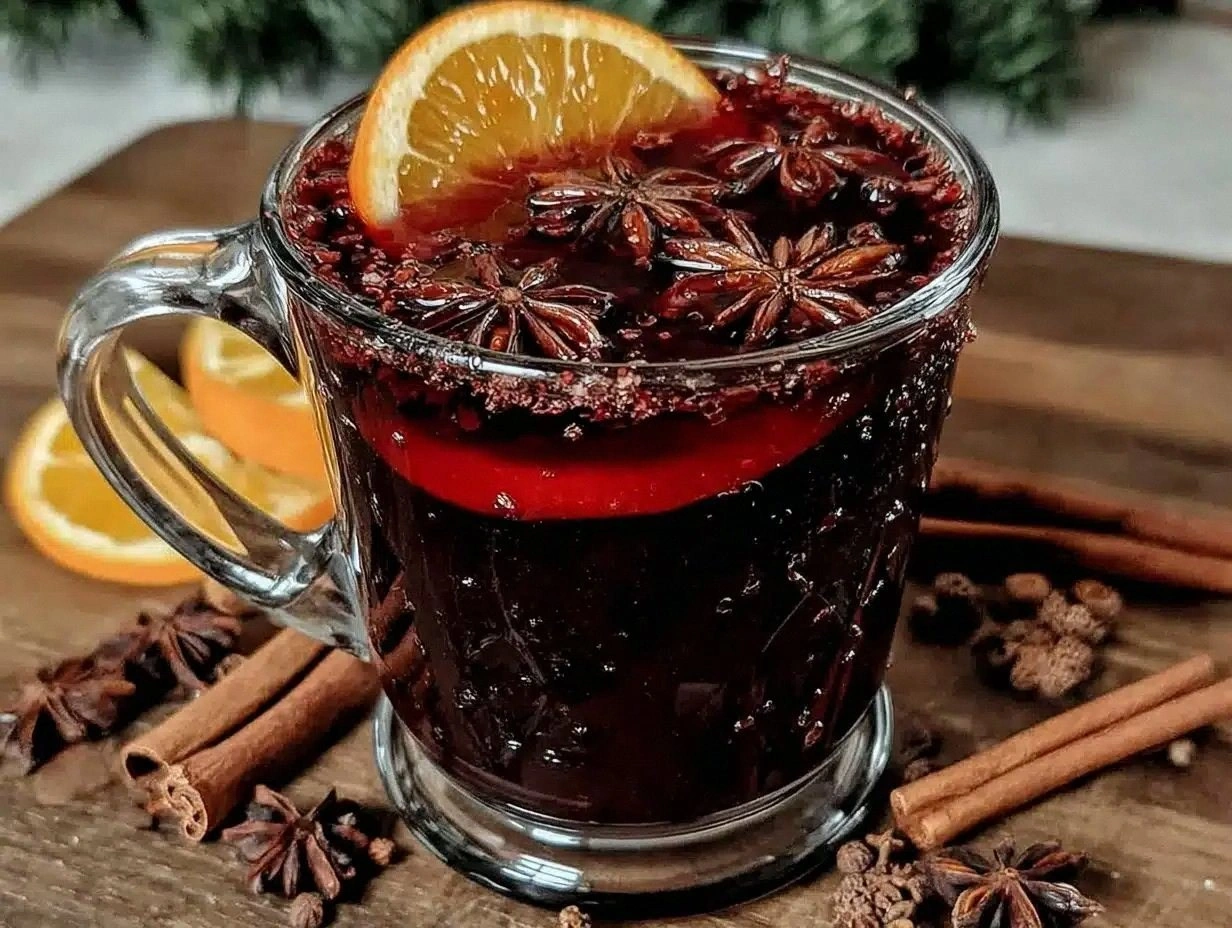
The Method — Step by Step
Start by gathering all your ingredients on the countertop – this is the moment of truth where you realize you actually have everything you need. Place a large, heavy‑bottomed pot on the stove over low heat. Add the entire bottle of red wine, letting it pour in like a silky river, and watch the color deepen as it settles.
Now, toss in the orange slices, cinnamon sticks, star anise, and cloves. As the spices hit the warm wine, you’ll hear a faint sizzle – that’s the aromatics waking up. Keep the heat low; you want a gentle whisper, not a roar, because boiling will drive off the alcohol and flatten the flavor.
Kitchen Hack: Use a ladle to skim off any foam that rises in the first few minutes – this keeps the final drink clear and glossy.While the wine is warming, slice the ginger thinly – think paper‑thin, not chunky. Add the ginger slices to the pot once the wine is steaming but not bubbling. The ginger will release its sharp, peppery aroma, and you’ll notice the scent shifting from purely sweet to a more complex, invigorating blend.
At this point, drizzle in the honey or maple syrup. Stir gently with a wooden spoon, watching the golden liquid swirl and dissolve. The sweetener should melt completely, coating the spices like a thin, fragrant veil.
If you’re using the optional apple cider, pour it in now. This adds a subtle fruitiness and a touch of acidity that brightens the overall profile. The mixture should now emit a perfume that could convince a snowman to melt – orange, cinnamon, a hint of vanilla, and a whisper of ginger.
Turn the heat to the lowest setting and let the concoction simmer for 20‑25 minutes. You’ll see tiny bubbles forming around the edges; that’s the sweet spot where flavors meld without boiling off the alcohol.
Midway through the simmer, stir in the vanilla extract. This is pure magic – the vanilla rounds the edges, smoothing the sharpness of the cloves and star anise. You’ll notice the aroma becoming more rounded, like a cozy blanket hugging the room.
Give the pot a gentle swirl, making sure the spices are evenly distributed. If you see any clumps of honey, break them up with the spoon; you want a uniform sweetness throughout.
Now comes the critical timing – after 25 minutes, taste the mulled wine. It should taste warm, spiced, and balanced; the orange should be bright, the ginger a subtle sting, and the sweetness just enough to coax the flavors forward.
If it feels a touch too sharp, add a splash more honey or maple syrup. If it’s overly sweet, a pinch of extra orange zest or a dash of lemon juice will restore balance. Remember, this is your canvas – adjust until it sings.
Watch Out: Do NOT let the mixture reach a rolling boil; the alcohol will evaporate, and the spices can turn bitter, ruining the delicate balance you’ve worked so hard to achieve.Once satisfied, turn off the heat and let the pot sit for five minutes. This resting period allows the spices to settle and the flavors to meld further – a 5‑minute rest that changes everything.
While you wait, prepare your serving glasses or mugs. I like to rim each glass with a light dusting of cinnamon sugar for an extra festive touch.
Now, strain the mulled wine through a fine‑mesh sieve into a clean pot or directly into your serving vessels. Press the orange slices gently with the back of a spoon to extract any remaining juices, but don’t over‑press – you don’t want the bitter pith.
Serve immediately, garnished with a fresh orange wheel and a cinnamon stick. The presentation should look like a warm ember in a glass, inviting you to take that first sip.
Kitchen Hack: Keep a small thermos on hand; you can pour the leftovers into it and maintain the perfect sipping temperature for hours.Finally, gather everyone around the table, pour the steaming mulled wine, and watch the smiles appear. That sizzle when it hits the pan? Absolute perfection. I dare you to taste this and not go back for seconds – the flavor lingers on the palate like a warm memory.
That’s it — you did it. But hold on, I’ve got a few more tricks that’ll take this to another level…
Insider Tricks for Flawless Results
The Temperature Rule Nobody Follows
Keep the heat low and slow. A gentle simmer extracts flavors without scorching the wine, preserving its natural fruitiness. If you notice the liquid starting to bubble, drop the temperature immediately – a quick adjustment saves the entire batch from turning bitter.
Why Your Nose Knows Best
Don’t rely solely on timers. The moment the kitchen fills with that sweet‑spicy perfume, you know the flavors are marrying. If the scent feels flat, give it another five minutes; if it’s already intoxicating, you’re ready to taste.
The 5‑Minute Rest That Changes Everything
After you turn off the heat, let the mulled wine sit uncovered for exactly five minutes. This short rest lets the spices settle and the flavors integrate, resulting in a smoother sip. Skipping this step is the reason many people end up with a harsh, uneven drink.
Ginger Timing Trick
Adding ginger too early can make the drink overly sharp; too late and you lose its bright zing. Slice it thin and add it when the wine is just beginning to steam – that’s the sweet spot where the ginger releases flavor without dominating.
Sweetener Balance Secret
Start with the lower end of the honey/maple range, taste, and then adjust. Remember, the wine already has residual sugar; over‑sweetening masks the spice. If you’re serving a crowd with kids, you can set aside a small portion of the pot before adding honey and let the kids sweeten their own cups.
Creative Twists and Variations
This recipe is a playground. Here are some of my favorite ways to switch things up:
Winter Berry Burst
Swap the orange for a handful of fresh cranberries and a splash of pomegranate juice. The tart berries add a ruby hue and a bright acidity that pairs beautifully with the deep wine.
Spiked Holiday Cheer
For an extra kick, add a shot of dark rum or brandy after straining. The spirit deepens the warmth, making it perfect for after‑dinner sipping.
Non‑Alcoholic Cozy Brew
Replace the wine with a robust black tea base (like Assam) and keep the same spices. Add a splash of grape juice for color and sweetness – you still get the comforting spice profile without the alcohol.
Maple‑Ginger Delight
Increase the ginger to a two‑inch piece and swap honey for pure maple syrup. The result is a richer, caramel‑spiced drink that feels like a sweet winter sunrise.
Smoky Whisper
Introduce a pinch of smoked paprika or a few drops of liquid smoke for an unexpected smoky undertone. It’s subtle but adds depth that surprises the palate.
Festive Eggnog Fusion
Stir in a quarter cup of prepared eggnog at the end of cooking for a creamy, holiday‑themed mulled wine. The eggnog’s nutmeg complements the existing spices, creating a decadent hybrid.
Storing and Bringing It Back to Life
Fridge Storage
Transfer any leftovers to an airtight glass jar and refrigerate. It will keep for up to three days. When ready to serve, gently reheat on the stove over low heat, adding a splash of water to revive the aroma.
Freezer Friendly
For longer storage, pour the cooled mulled wine into freezer‑safe containers, leaving an inch of headspace. It freezes solid for up to two months. Thaw overnight in the fridge, then reheat gently as described above.
Best Reheating Method
Never microwave – it creates hot spots and can scorch the spices. Instead, place the wine in a saucepan over low heat, stirring occasionally. Add a tiny splash of water (about a tablespoon per cup) to steam it back to perfection, preserving the silky mouthfeel.