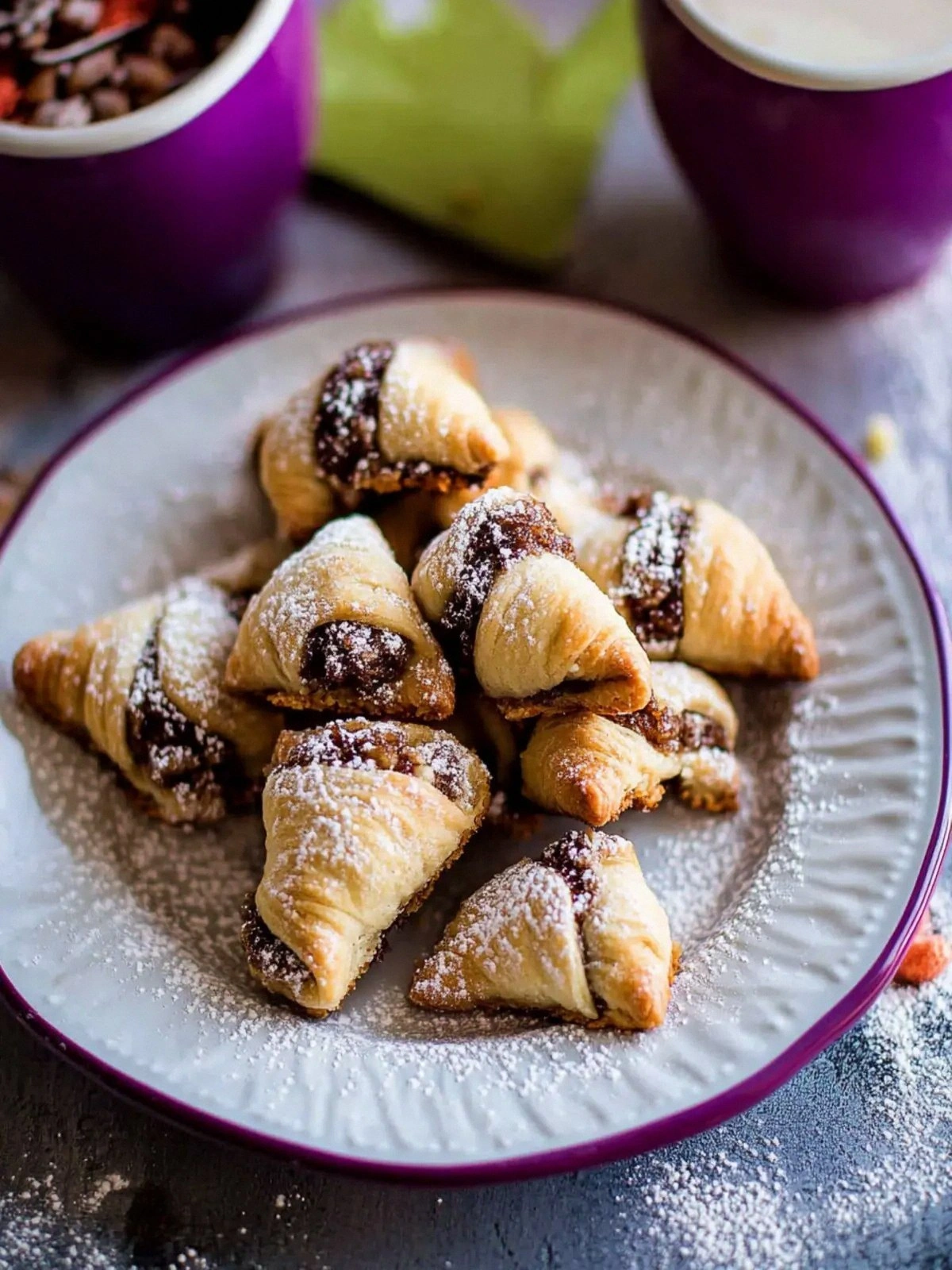
If you’ve ever struggled with a dough that clings to your bowl, you’re not alone. The trick is to keep the butter cold and the mixing minimal, so the fat stays in small, discrete pockets. I’ve always believed that the secret to flaky pastries lies in the fat-to-flour ratio, and I’ve tweaked that ratio until I hit the sweet spot for rugelach. The result is a dough that rolls out thin, yet holds its shape when folded and baked. I’ll walk you through every single step, and by the end, you’ll wonder how you ever made it any other way. Trust me, the payoff is worth the extra attention to detail.
The moment I first tasted the finished product, I knew this was a game-changer. The cookies are crisp on the outside, tender on the inside, and the filling of cream cheese, sour cream, and brown sugar creates a luscious, slightly tangy glaze that coats every bite. The walnuts add a nutty crunch that contrasts beautifully with the soft dough, and the raisins provide a burst of natural sweetness that balances the cinnamon. Every bite is a reminder of how simple ingredients, when handled with care, can produce extraordinary flavor. I’ll keep you with me here—this is worth it.
What Makes This Version Stand Out
- Flavor: The combination of cream cheese, sour cream, and brown sugar delivers a rich, tangy sweetness that’s elevated by a subtle hint of cinnamon.
- Texture: The dough’s flaky layers are achieved through precise cold butter and minimal mixing, resulting in a crisp edge that shatters like thin ice.
- Ease: Despite the seemingly intricate process, each step is straightforward and can be mastered in a single cooking session.
- Uniqueness: The addition of water during dough formation creates a lighter crumb, a twist that sets this recipe apart from traditional rugelach.
- Crowd Appeal: Guests rave about the perfect balance of sweet and savory, making it the go-to dessert for any gathering.
- Ingredient Quality: Using full‑fat cream cheese and high‑quality butter enhances flavor depth and mouthfeel.
- Make‑Ahead: The dough can be refrigerated for up to 48 hours, allowing you to prepare in advance for busy weeks.
- Versatility: The base can be adapted with various fillings—chocolate, fruit, or even savory options—making it a playground for creativity.
Alright, let’s break down exactly what goes into this masterpiece. The ingredient list is divided into four distinct squads: the flavor base, the texture crew, the unexpected star, and the final flourish. Each squad plays a crucial role, and together they orchestrate a symphony of taste and texture that makes these rugelach unforgettable. I’ll walk you through each group, explaining why each component matters, what happens if you skip it, and how to tweak it to suit your palate.
The Flavor Base
All-purpose flour is the silent hero that holds everything together. It provides structure while remaining neutral enough to let the other flavors shine. If you substitute whole wheat flour, the texture becomes denser and the flavor profile shifts slightly toward nuttiness, which can be delightful if you’re aiming for a heartier cookie. Choosing a high‑protein flour can make the dough tougher, so stick to a standard all‑purpose blend for best results. When measuring flour, spoon it into the measuring cup and level it off with a knife; scooping directly can compress the flour and throw off the dough’s moisture balance.
Salt is the flavor enhancer that brings out the sweetness of the cream cheese and the richness of the butter. A pinch of salt is enough to balance the sweetness without making the dough taste metallic. If you’re watching sodium, you can reduce the amount to 1/4 teaspoon, but be prepared for a slightly flat flavor. Some bakers add a dash of sea salt on top of the finished cookies for an extra pop, but that’s purely optional. Remember, salt also helps control yeast activity if you’re ever experimenting with leavened versions.
The Texture Crew
Unsalted butter is the cornerstone of flaky dough. It must be cold to create pockets of steam when baked, which lifts the layers. If you use salted butter, you’ll need to adjust the salt in the dough to avoid over‑salting. Keep the butter in the fridge until you’re ready to use it, and cut it into small cubes before incorporating it into the flour. The trick is to cut the butter into the flour until the mixture resembles coarse crumbs; this ensures the butter stays cold and intact.
Cream cheese adds richness and moisture, while the sour cream provides tang and helps tenderize the dough. The 6-ounce portion is measured in ounces for precision; if you only have a 4-ounce block, use 4 ounces and adjust the butter proportionally to keep the dough’s consistency. Cream cheese’s fat content is essential; using low‑fat versions will result in a drier cookie that lacks the silky mouthfeel. A quick tip: let the cream cheese sit at room temperature for 10 minutes before mixing to prevent it from clumping.
The Unexpected Star
Brown sugar is the sweetener that gives the filling depth and a hint of molasses. It also caramelizes slightly during baking, creating a subtle crust on the surface of the cookies. If you prefer a lighter sweetness, substitute it with white sugar or a sugar substitute that behaves similarly in baking. The 1/2 cup measurement is crucial; too much sugar can make the dough sticky and difficult to roll. For a caramelized finish, toast the sugar in a dry skillet before adding it to the filling.
Ground cinnamon is the spice that ties everything together and adds warmth. A tablespoon is generous, but you can reduce it to 1 teaspoon for a milder flavor. Cinnamon’s aromatic compounds release when heated, enhancing the overall scent profile of the cookies. If you’re a fan of a more complex spice blend, consider adding a pinch of nutmeg or cardamom for depth. The key is to keep the cinnamon evenly distributed in the filling to avoid clumps.
The Final Flourish
Water is the secret ingredient that keeps the dough from becoming too dry. A splash—about two tablespoons—helps the butter and flour bind without overworking the dough. If you skip the water, the dough may crumble when you try to roll it, leading to uneven cookies. The exact amount can vary depending on humidity; add a teaspoon at a time until the dough comes together. This small tweak is why these cookies have a lighter crumb than most traditional rugelach.
Confectioners’ sugar is used for dusting the finished cookies, giving them a delicate finish and a hint of sweetness that balances the savory filling. A light dusting is all you need; too much can make the cookies greasy. If you prefer a non‑sugary finish, you can skip this step or use a sugar substitute that doesn’t dissolve. The sugar also adds a subtle sparkle to the surface, making the cookies look as good as they taste. Store the remaining sugar in an airtight container to keep it free from clumps.
Everything's prepped? Good. Let's get into the real action. The method is a dance of precision and timing, and I’ll guide you through each step so you can master the art of rugelach. We’ll start with the dough, then move to the filling, and finally, the rolling and baking. The trickiest part is rolling the dough into thin, even sheets without tearing it, but with a little practice, you’ll become a pro. I’ll also share a few micro‑challenges along the way—like the daring challenge of adding a surprise ingredient—to keep you engaged and excited.
Step 1: Combine the flour, salt, and a pinch of confectioners’ sugar in a large bowl. Stir until the mixture is uniform, then set aside. The flour should be evenly distributed; any clumps will affect the dough’s final texture. This is the foundation of the entire cookie, so treat it with the respect it deserves. As you mix, you’ll notice the flour’s fine scent—a subtle reminder of the simple ingredients that will soon transform into something extraordinary.
Step 2: Cut the cold butter into small cubes and add it to the flour mixture. Using a pastry cutter or your fingertips, rub the butter into the flour until the mixture resembles coarse crumbs. The goal is to have small, distinct pieces of butter; if they’re too small, the dough will become too dry. If you’re nervous about handling the cold butter, place the butter and flour on a chilled cutting board and work quickly. The cold butter will keep the dough flaky when it bakes.
Step 3: In a separate bowl, whisk together the cream cheese, sour cream, brown sugar, and ground cinnamon until the mixture is smooth and creamy. The filling should be thick enough to hold its shape when rolled but not so thick that it’s difficult to spread. If the mixture feels too runny, add a tablespoon of flour to thicken it slightly. This filling is the heart of the cookie, so make sure it’s rich and flavorful. The aroma of cinnamon and sweet cream will start to permeate the kitchen.
Step 4: Gradually add the filling mixture to the dough, mixing until fully incorporated. The dough will start to clump and feel slightly sticky; this is normal. Knead the dough gently on a floured surface until it forms a cohesive ball. Avoid over‑kneading, as this will develop gluten and make the cookies tough. At this point, the dough should feel soft but not overly sticky, and it should hold together when you press it between your fingers.
Step 5: Roll the dough into a rectangle about 1/4 inch thick. The thickness is key; too thick and the cookies will be dense, too thin and they may tear. Use a rolling pin and keep the surface lightly floured to prevent sticking. Once the dough is rolled, cut it into 3-inch squares. The squares should be uniform to ensure even baking. As you cut, you’ll see the dough’s texture—soft, pliable, and ready for the next step.
Step 6: Place a spoonful of the filling in the center of each square, then fold the corners toward the center, pinching them together to seal. The filling should be snug but not overfilled; excess filling can leak out during baking. This is the moment of truth—if the edges seal properly, the cookies will hold their shape. Keep a bowl of warm water nearby for your hands to dip in if the dough sticks. Once sealed, roll each cookie gently on the counter to smooth the edges and ensure a clean seal.
Step 7: Arrange the rolled cookies on a parchment‑lined baking sheet, spacing them about 2 inches apart to allow for expansion. The spacing also prevents the cookies from sticking together. Preheat your oven to 350°F (175°C) while you finish arranging the cookies. The oven’s heat will create steam that lifts the layers, giving the cookies their signature flakiness.
Step 8: Bake for 18–20 minutes, or until the edges are golden brown and the tops are lightly caramelized. The cookies should emit a warm, buttery aroma that makes the kitchen feel like a bakery. As they bake, watch the edges crisp up while the center remains soft. Once done, let them cool on the sheet for 5 minutes before transferring them to a wire rack to cool completely. The cooling period is essential; it allows the cookies to set and the flavors to meld.
Step 9: Dust the cooled cookies lightly with confectioners’ sugar. The sugar adds a delicate sweetness that complements the filling. Use a fine sieve to avoid clumps, and sprinkle gently to avoid overpowering the cookie’s natural flavors. The dusting also gives the cookies a subtle shine, making them look as good as they taste. This final touch turns a good cookie into a showstopper.
Step 10: Serve immediately or store in an airtight container at room temperature for up to 3 days. If you’re making them ahead of time, keep them in the refrigerator and let them come to room temperature before serving. The cookies are best enjoyed fresh, but they hold up well when stored properly. Remember, the best part of this recipe is the flexibility—you can adjust the filling or add a twist, and it will still be delicious.
Insider Tricks for Flawless Results
The Temperature Rule Nobody Follows
Temperature control is everything when it comes to flaky pastries. I’ve discovered that a 5‑minute rest at room temperature after kneading allows the gluten to relax, making the dough easier to roll. If you’re in a hurry, skip the rest, but you’ll notice a slight difference in texture. The rest also lets the butter re‑solidify slightly, preventing the dough from sticking. This simple step is often overlooked, but it can make the difference between a decent cookie and a showstopper.
Why Your Nose Knows Best
Your nose is the ultimate judge of doneness. As the cookies bake, a sweet, buttery scent will fill the air—this is your cue that they’re nearing perfection. If you’re unsure, look for the edges turning golden and the tops slightly caramelized. The aroma will intensify as the cookies finish, so don’t be tempted to pull them out early. Trust your senses, and you’ll always get a perfect bake.
The 5‑Minute Rest That Changes Everything
After baking, let the cookies rest on the sheet for 5 minutes before transferring them to a wire rack. This brief rest allows the cookies to firm up, preventing them from breaking apart when moved. The residual heat will continue to cook the interior slightly, ensuring a uniform texture. I’ve seen cookies crumble if they’re moved too soon, so this step is essential. It’s a small investment of time for a big payoff in quality.
Keep the Flour Light
When measuring flour, spoon it into the measuring cup and level it off. Scooping directly can compress the flour, leading to a denser dough. This trick is especially important for those who are new to baking, as it helps avoid common mistakes. Use a level measuring cup for accuracy, and always sift the flour if it’s been sitting for a while. The lightness of the flour contributes to the cookie’s airy interior.
Don’t Skimp on the Butter
The butter’s fat content is what creates the flaky layers. Using a butter with less than 80% fat can result in a flatter cookie. If you’re using a lower‑fat butter, increase the butter amount by 2 tablespoons to compensate. Some bakers prefer salted butter for convenience, but you’ll need to reduce the added salt accordingly. The key is to keep the butter cold and in small chunks to achieve the perfect flakiness.
Make‑Ahead Magic
If you’re preparing for a party, you can make the dough a day ahead. Store it in an airtight container in the refrigerator, and when you’re ready to bake, let it sit at room temperature for 20 minutes before rolling. This step ensures the dough is pliable and won’t tear. The cookies will bake just as well, and you’ll have more time to enjoy the event. I’ve used this trick for holiday gatherings, and it’s a lifesaver.
Creative Twists and Variations
This recipe is a playground. Here are some of my favorite ways to switch things up:
Chocolate Chip Rugelach
Swap the raisins for dark chocolate chips and add a teaspoon of vanilla extract to the filling. The chocolate adds a rich depth that pairs beautifully with the cinnamon. For an extra crunch, sprinkle a few chopped hazelnuts on top before baking. The result is a decadent treat that’s perfect for chocolate lovers. The chocolate will melt slightly, creating a gooey center that’s simply irresistible.
Apple Cinnamon Rugelach
Dice a small apple and mix it into the filling, replacing half of the raisins. Add an extra 1/2 teaspoon of ground cinnamon to enhance the apple flavor. The apples give a fresh, fruity bite that contrasts the warm spices. Bake as usual, and you’ll have a cookie that feels like a mini apple pie. The apple’s natural sweetness balances the richness of the cream cheese.
Nutty Banana Rugelach
Mash a ripe banana and fold it into the filling, replacing the raisins. Add a pinch of nutmeg for warmth and a handful of chopped pecans for crunch. The banana adds natural sweetness and a smooth texture, while the pecans provide a nutty finish. This version is a great way to use overripe bananas and create a dessert that feels both indulgent and wholesome. The banana’s subtle flavor complements the cinnamon beautifully.
Savory Herb Rugelach
Replace the brown sugar with a tablespoon of dried herbs like rosemary or thyme. Add a pinch of garlic powder for depth. The savory filling turns the cookies into a perfect accompaniment for cheese platters or as a side for soups. The herbs infuse the dough with aromatic complexity, making each bite a savory delight. This variation is ideal for those who enjoy a more sophisticated palate.
Chocolate-Covered Rugelach
After baking, dip half of the cookies in melted dark chocolate and let them set on parchment. Drizzle white chocolate on top for a decorative touch. The chocolate coating adds a glossy finish and a burst of richness. This version is perfect for special occasions or as a gift. The chocolate melts into the warm cookie, creating a decadent experience.
Maple Walnut Rugelach
Swap the brown sugar for maple syrup in the filling, and add a tablespoon of maple extract for an intensified flavor. Keep the walnuts as they are to maintain the crunch. Maple syrup adds a sweet, caramel-like taste that pairs wonderfully with the cinnamon. Bake as usual, and you’ll have a cookie that feels like a maple latte in cookie form. The maple’s natural sweetness is a subtle, comforting note.
Storing and Bringing It Back to Life
Fridge Storage
Store the cooled cookies in an airtight container in the refrigerator for up to 5 days. The cold environment keeps the butter from melting and preserves the cookies’ freshness. Before serving, let them sit at room temperature for 10 minutes to soften slightly. The cookies will still retain their flaky texture, but they’ll be easier to bite through. This method is ideal for meal prep or for guests who arrive later in the day.
Freezer Friendly
For longer storage, place the cookies in a single layer on a parchment line and freeze for up to 2 months. Once frozen, transfer them to a resealable bag to prevent freezer burn. When ready to eat, thaw them at room temperature for 30 minutes. The cookies will keep their texture and flavor, making them a convenient option for busy days. Freezing also allows you to batch‑cook and enjoy the cookies whenever the craving strikes.
Best Reheating Method
To revive frozen or refrigerated cookies, preheat your oven to 350°F (175°C). Place the cookies on a parchment‑lined sheet and bake for 8–10 minutes, or until the edges are crisp. If the cookies feel dry, add a tiny splash of water to the dough before baking; this steams them back to perfection. Let them cool for a few minutes before serving. The reheated cookies taste almost as fresh as when they first came out of the oven, and the flaky layers return with a satisfying crunch.