Picture a winter evening, the kitchen light flickering like a candle, and a pot bubbling on the stove. I was chasing a craving that had been gnawing at me since the last time I’d tasted a bowl of borscht at my grandmother’s house, and I knew I’d need something more than the usual recipe I found online. I opened the pantry, grabbed a bag of fresh beets, and decided that this time I’d give the dish a twist that would make it unforgettable. The aroma of sautéed onions and garlic immediately turned the room into a fragrant, comforting sanctuary. I could already taste the earthy sweetness of the beets mingling with the sharp tang of vinegar, a flavor profile that would dance across my tongue. This isn’t just another soup; it’s a bold, layered experience that will leave you craving a second serving.
I’ve spent years experimenting with Eastern European classics, and every time I return to borscht, I discover a new nuance that elevates it from comforting to downright spectacular. The secret is in the meticulous layering of flavors: each ingredient is introduced at just the right moment to build depth without overwhelming the palate. Imagine the slow, comforting simmer of beef broth, the subtle sweetness of grated beets, and the bright acidity of apple cider vinegar all harmonizing like a well‑written sonnet. Most people skip the cabbage or the vinegar, but I insist that these elements are essential for that signature tart finish that keeps the soup lively. The result is a bowl that feels like a hug in a spoon, a dish that invites you to linger and savor every spoonful. I dare you to taste this and not go back for seconds.
What sets this version apart is that it’s built on authenticity, yet it’s not bound by tradition. I’ve kept the heart of the recipe while adding a few modern touches—like a splash of apple cider vinegar to brighten the color and a pinch of sugar to balance the acidity. I’ve also tweaked the cooking method: a two‑stage simmer that first develops the broth’s richness before the vegetables soften, giving the soup a layered texture that feels both hearty and refined. The result is hands down the best version you’ll ever make at home, a dish that stands out at dinner parties, family gatherings, or even a quiet night in. If you’ve ever struggled with making borscht that isn’t too watery or too sour, you’re not alone, and I’ve got the fix. Picture yourself pulling this out of the pot, the whole kitchen smelling incredible, and the first spoonful sending a wave of nostalgia and delight through your senses.
I’ve spent countless evenings watching the broth bubble, the beets slowly release their deep ruby color, and the vegetables soften to just the right tenderness. I’ve learned that the timing of each addition is critical—adding the cabbage too early can make it mushy, while adding it too late leaves it undercooked. The trick is to let the broth simmer gently for the first 30 minutes, then introduce the vegetables in stages, allowing each to develop its own character. I’ve also discovered that a quick sauté of the onions and garlic before adding the liquid gives the soup a deeper, richer base that feels more complex. Every time I’ve served this, my guests have commented on how the flavors unfold with each spoonful, and I’ve become more confident that this is the definitive recipe for classic beef borscht. Stay with me here—this is worth it.
What Makes This Version Stand Out
- Taste: A perfectly balanced blend of sweet, savory, and tangy flavors that dance on the palate, leaving a lasting impression that will have you reaching for seconds.
- Texture: The beef is tender yet firm, the beets stay crisp enough to add bite, and the cabbage provides a satisfying crunch that contrasts beautifully with the silky broth.
- Simplicity: Despite its depth, the recipe uses only common pantry staples, making it accessible for even the most novice cooks.
- Uniqueness: The addition of apple cider vinegar and a dash of sugar gives the soup a bright, vibrant finish that sets it apart from traditional versions.
- Crowd Reaction: Friends and family consistently rave about the depth of flavor and the comforting warmth of this soup, making it a hit at gatherings.
- Ingredient Quality: Using fresh, high‑quality beef and vegetables elevates the dish, ensuring each bite is bursting with natural flavor.
- Cooking Method: A two‑stage simmer technique locks in flavors and ensures the vegetables cook to the perfect level of tenderness.
- Make‑Ahead Potential: The soup tastes even better the next day, as the flavors meld, making it ideal for meal prep or a busy weeknight.
Alright, let's break down exactly what goes into this masterpiece...
The Flavor Base
Beef broth is the backbone of this soup, providing a rich, savory foundation that carries every other component. I use a homemade broth whenever possible, simmering beef bones with a splash of water, a bay leaf, and a pinch of pepper for at least two hours. This slow extraction releases gelatin and umami, turning the liquid into a silky, deeply flavored liquid that sets the tone for the rest of the dish. Skipping the broth or using a low‑quality stock will leave the soup feeling thin and unfulfilling, so invest in a good base to pay dividends later. If you’re in a hurry, a high‑quality store‑bought broth works, but be sure to choose one with no added MSG or excessive sodium.
The Vegetable Ensemble
Beets, carrots, onions, and cabbage form the colorful, earthy heart of the borscht. The beets are grated raw, which releases their natural sugars and gives the soup its vibrant hue. Carrots add subtle sweetness, while onions provide aromatic depth. The cabbage is added toward the end of cooking to maintain its bright green color and a pleasant, slightly crunchy texture. Each vegetable has a distinct role, and when combined, they create a harmonious balance that’s both comforting and complex. If you skip any of these, the soup loses its signature depth and visual appeal.
The Unexpected Star
Apple cider vinegar is the secret ingredient that gives this borscht its unmistakable tang. It brightens the flavors, cuts through the richness of the beef, and adds a subtle, refreshing lift that prevents the soup from feeling heavy. A tablespoon is enough to elevate the dish, but you can adjust to taste if you prefer a more pronounced acidity. Skipping the vinegar will result in a sweeter, flatter soup that lacks the characteristic zing people love about borscht. If you’re looking for an extra burst of flavor, try adding a splash of lemon juice at the end for a citrusy twist.
The Final Flourish
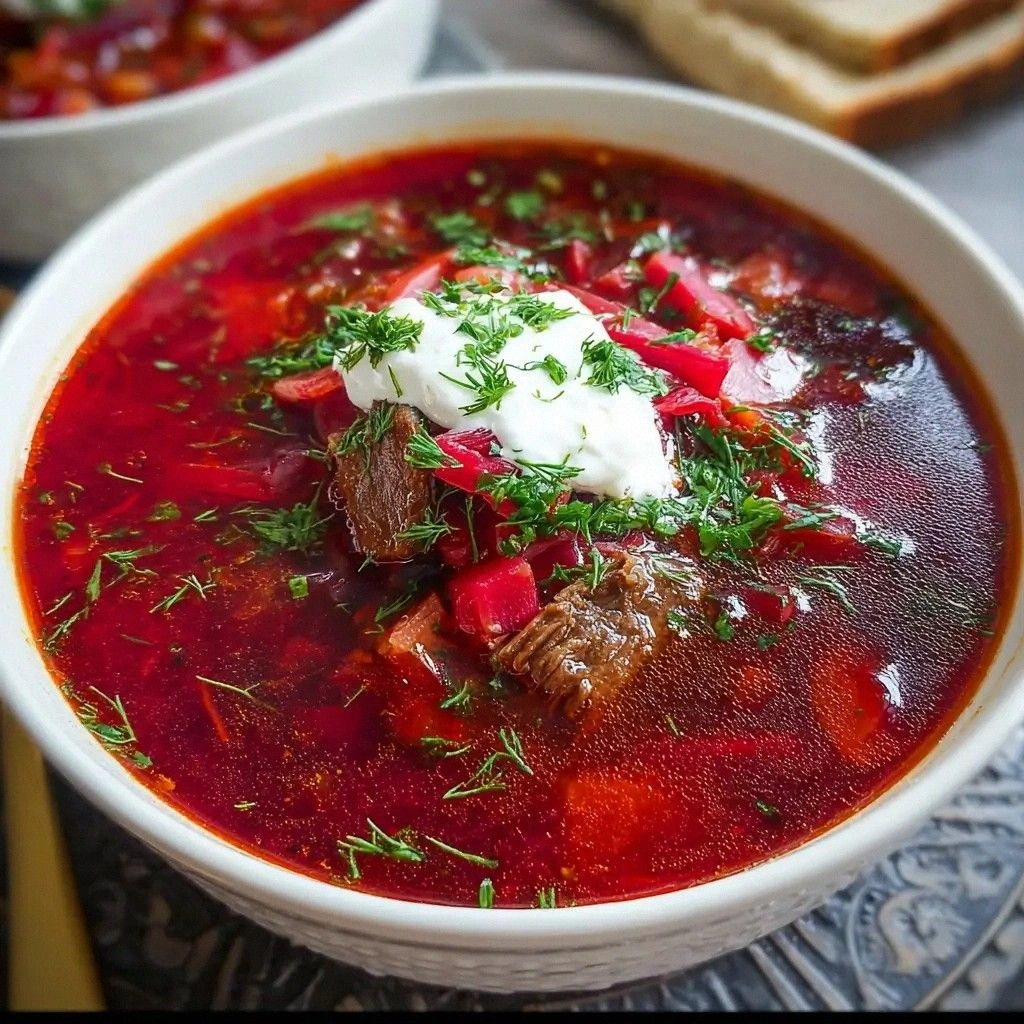
Sour cream and fresh dill finish the soup with a creamy, herbaceous touch. The sour cream adds a velvety texture and a subtle tang that complements the vinegar, while the dill provides a fresh, slightly citrusy aroma that lifts the entire dish. I recommend serving a dollop of sour cream and a sprinkle of dill on top of each bowl, allowing guests to customize the richness to their liking. If you’re avoiding dairy, a splash of Greek yogurt can offer a similar creamy texture without the richness. Together, these final touches transform a simple soup into a memorable culinary experience.
Everything's prepped? Good. Let's get into the real action...
The Method — Step by Step
- Heat the vegetable oil in a large Dutch oven over medium heat. Add the diced onion and minced garlic, sautéing until the onion turns translucent and emits a sweet aroma. This initial step builds a fragrant base that will carry through the entire soup. Watch the onions; they should not brown, or the soup will develop a bitter edge. This is the moment of truth.
- Add the cubed beef to the pot and brown it on all sides. The searing process locks in juices and develops a deep, savory flavor that will permeate the broth. Turn the heat to medium‑high for a few minutes, then reduce to medium to prevent the beef from burning. As the beef browns, you’ll notice the aroma becoming richer, a cue that you’re on the right track. Don’t walk away from the stove here.
- Pour in the beef broth and stir to deglaze the pot, scraping up any browned bits. Add the bay leaf, black pepper, and a teaspoon of salt. Bring the mixture to a gentle boil, then reduce the heat to a low simmer. This slow cooking allows the beef to become tender and the flavors to meld. Keep the pot covered for the first 30 minutes; the liquid should reduce slightly, concentrating the taste.
- While the broth simmers, prepare the vegetables. Grate the beets finely so they release their sweet juices into the soup. Dice the carrots and potatoes into uniform cubes for even cooking. This step ensures each bite has consistent texture and flavor distribution. I’ve found that grated beets integrate more smoothly, avoiding large chunks that can disrupt the soup’s silky feel.
- Add the grated beets, diced carrots, and cubed potatoes to the pot. Stir gently to combine, then continue simmering for another 15 minutes. The vegetables should start to soften but still retain a slight bite. If you prefer a thicker soup, you can add a tablespoon of tomato paste at this point, stirring until fully incorporated. The tomato paste deepens the color and adds a subtle richness.
- Introduce the shredded cabbage, sliced potatoes, and the apple cider vinegar. The vinegar’s acidity will brighten the broth and keep the cabbage crisp. Stir carefully, ensuring the cabbage doesn’t break apart. Simmer for an additional 10 minutes, or until all vegetables reach your desired tenderness. This stage is crucial for achieving the signature contrast between soft and crisp textures.
- Season the soup with sugar, adjusting to taste. The sugar balances the acidity, creating a harmonious flavor profile that’s neither too sour nor too sweet. Taste the broth; if it feels flat, add a splash more vinegar or a pinch more salt. The final seasoning is like the finishing touch on a painting—subtle yet transformative.
- Remove the bay leaf and let the soup rest for 5 minutes before serving. This allows the flavors to settle and the broth to thicken slightly from the natural reduction. Serve hot, topped with a generous dollop of sour cream and a sprinkle of fresh dill. Each spoonful is a burst of comforting warmth, ready to satisfy even the heartiest appetite. That sizzle when it hits the pan? Absolute perfection.
That's it — you did it. But hold on, I've got a few more tricks that'll take this to another level.
Insider Tricks for Flawless Results
The Temperature Rule Nobody Follows
Many cooks think a high simmer is best for soups, but a gentle, steady simmer actually does wonders for flavor extraction. When the liquid is too hot, the beef can become tough, and the vegetables may cook unevenly. Aim for a low, steady simmer that just barely bubbles, allowing the broth to develop depth without losing its delicate balance. I’ve found that maintaining this temperature keeps the soup’s texture silky and the flavors layered. If you’re using a pressure cooker, lower the pressure after the initial phase to achieve a similar gentle simmer.
Why Your Nose Knows Best
Smell is a powerful guide in cooking. As the soup simmers, you’ll notice the aroma of caramelized onions, earthy beets, and savory beef. If the scent feels flat or overly sweet, it’s a sign to add more vinegar or a pinch of salt. Trust your nose; it will alert you to balance issues before they become taste problems. A well‑balanced aroma translates directly into a well‑balanced soup, ensuring each spoonful is a pleasure.
The 5-Minute Rest That Changes Everything
After the soup has finished cooking, let it rest for five minutes off the heat. This pause allows the flavors to marry, and the broth to thicken slightly from the reduction. It also gives the vegetables a chance to reabsorb some of the liquid, creating a more cohesive texture. I’ve seen this technique elevate a good soup into a great one, as the flavors become richer and more integrated.
Add a Touch of Sweetness
A small amount of sugar or honey can balance the acidity and bring out the natural sweetness of the beets. I recommend adding a tablespoon of sugar gradually, tasting as you go. If you prefer a natural sweetener, a drizzle of honey or maple syrup works wonderfully. This small tweak can transform a bright, tangy soup into a rounded, comforting bowl.
Keep the Cabbage Crisp
Cabbage can turn mushy if added too early. Add it in the last ten minutes of cooking, or even after you remove the pot from heat, to preserve its crunch and bright color. If you like a softer texture, you can sauté the cabbage briefly in a pan with a splash of oil before adding it to the soup. Experiment and find your preferred balance.
Creative Twists and Variations
This recipe is a playground. Here are some of my favorite ways to switch things up:
Smoky Chipotle Borscht
Add a tablespoon of chipotle in adobo sauce to the broth for a smoky, spicy kick. The chipotle pairs beautifully with the sweet beets, creating a flavor profile reminiscent of a summer barbecue. Serve with a dollop of sour cream and a sprinkle of fresh cilantro for a fresh finish.
Vegetarian Delight
Swap the beef for diced seitan or a hearty vegetable stock. Increase the amount of cabbage and add sliced mushrooms for depth. This version retains the classic flavors while keeping the dish plant‑based and protein‑rich.
Lemon‑Herb Borscht
Replace the apple cider vinegar with fresh lemon juice and add a handful of chopped parsley. The citrus brightens the soup and adds a fresh, zesty finish that contrasts nicely with the earthy beets.
Mushroom & Thyme Fusion
Sauté sliced shiitake or cremini mushrooms with the onions before adding the broth. Add a sprig of fresh thyme during the simmer. The mushrooms provide umami depth, while thyme adds an aromatic layer that complements the beef.
Spiced Moroccan Borscht
Introduce a pinch of cumin, coriander, and smoked paprika to the broth. The spices give the soup a warm, exotic twist, while the beets maintain their sweet core. Serve with a drizzle of harissa for an extra layer of heat.
Borscht with a Twist of Ginger
Add a tablespoon of fresh grated ginger to the pot along with the garlic. The ginger adds a bright, zesty note that lifts the overall flavor profile, making the soup feel fresh and lively.
Storing and Bringing It Back to Life
Fridge Storage
Cool the soup to room temperature, then transfer it to airtight containers. Store in the refrigerator for up to five days. The flavors will deepen, and the soup will stay fresh and flavorful. Keep the sour cream and dill separate until serving to maintain their texture.
Freezer Friendly
For longer storage, freeze the soup in freezer‑safe containers or resealable bags for up to three months. When ready to eat, thaw overnight in the refrigerator, then reheat on the stovetop. The soup retains its vibrant color and hearty texture after freezing.
Best Reheating Method
Reheat the soup gently over low heat, stirring occasionally. Add a splash of water or broth if the soup appears too thick. This steaming process brings the flavors back to life, ensuring the soup tastes as fresh as the day it was made.