I still remember the first time I attempted scotch eggs the traditional way — a kitchen that looked like a flour bomb had exploded, oil splatters on every surface, and a smoke alarm serenading my failure. Fast forward through three failed attempts, a minor burn, and a very patient dog cleaning up the floor casualties, and you'll understand why discovering the air fryer version felt like winning the culinary lottery. The crunch was there, the runny yolk was perfect, and my kitchen didn't look like a war zone afterward. Now I'm practically evangelical about these golden orbs of happiness.
Picture this: It's Sunday morning, you're still in your pajamas, and the idea of standing over a vat of hot oil sounds about as appealing as a root canal. But you want that magical contrast of crispy sausage coating and tender egg that makes scotch eggs the ultimate comfort food. Enter the air fryer — your new best friend that delivers all the satisfaction without the mess, the stress, or the third-degree burns. The circulating hot air creates a shell so crispy it shatters like thin ice under your fork, while keeping the interior juicy and flavorful.
What makes this version absolutely unbeatable isn't just the convenience factor (though that's huge). It's the way the air fryer somehow manages to make the sausage coating even crispier than deep-frying while keeping it remarkably grease-free. The meat stays succulent, the egg yolk stays gloriously runny if that's your jam (or perfectly hard-boiled if you prefer), and the whole thing comes together with minimal cleanup. I dare you to taste this and not go back for seconds — I personally ate three in one sitting the first time I nailed this recipe.
The secret lies in a few game-changing techniques that most recipes completely miss. We're talking about the perfect egg cooking method that ensures easy peeling, the seasoning blend that makes the sausage sing, and the temperature trick that guarantees even cooking throughout. Stay with me here — this is worth it. Let me walk you through every single step — by the end, you'll wonder how you ever made it any other way.
What Makes This Version Stand Out
Crispy Perfection: The air fryer's rapid air circulation creates a crust that's somehow even crispier than traditional deep-frying, but without the greasy aftermath. It's like having your cake and eating it too, except it's scotch eggs and you can actually have six without feeling like you need a nap.
Foolproof Cooking: Unlike stovetop methods where one minute too long means rubbery sausage or overcooked eggs, the air fryer's consistent temperature takes the guesswork out. Set it and forget it — well, don't forget it completely, but you get the idea.
King of Meal Prep: These beauties reheat like champions, making them perfect for weekday lunches, picnic baskets, or midnight snacks when you need something substantial. They'll keep in the fridge for days and freeze beautifully for future you to discover like buried treasure.
Endless Customization: Once you master the basic technique, you can flavor the sausage with everything from curry powder to fennel seeds, or go wild with different meats. I've made versions with chorizo, breakfast sausage, and even a vegetarian mushroom-walnut mixture that knocked everyone's socks off.
Zero Oil Splatter: Remember the last time you deep-fried and found oil droplets on your ceiling? Yeah, none of that here. Your kitchen stays pristine, your clothes stay clean, and you don't have to explain to your significant other why there are grease spots on the light fixtures.
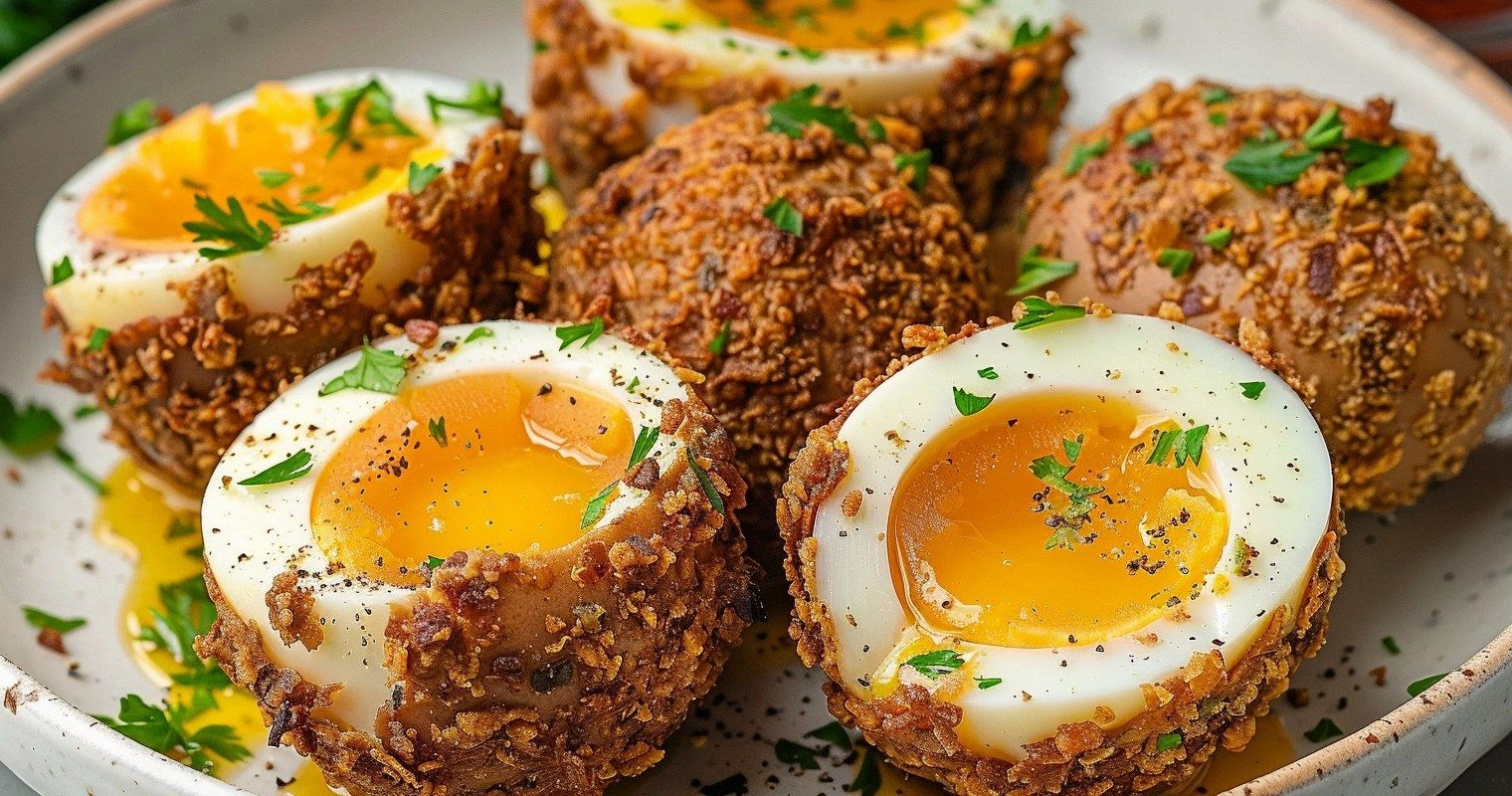
Restaurant Quality at Home: These look so professional that your guests will think you secretly trained at culinary school. The presentation is stunning — golden-brown spheres that slice open to reveal the perfect cross-section of egg and meat.
Family-Friendly Fun: Kids love helping roll these, and they're perfectly sized for little hands. Plus, you can sneak vegetables into the sausage mixture and they'll never know they're eating something nutritious.
Alright, let's break down exactly what goes into this masterpiece...
Inside the Ingredient List
The Foundation Players
The eggs are obviously the star here, but not just any eggs will do. You want large, room-temperature eggs that are about a week old — they're infinitely easier to peel than fresh ones. The age matters because older eggs have a higher pH, which helps separate the membrane from the shell. If you've ever struggled with peeling eggs that look like they've been through a battle, this is your solution. Trust me, I've served mangled eggs that looked like abstract art gone wrong.
For the sausage coating, good quality ground pork is traditional, but don't be afraid to mix it up. I often use a blend of pork and veal for extra tenderness, or go bold with spicy Italian sausage for a kick. The key is getting meat with about 20% fat — lean enough to stay cohesive but fatty enough to stay juicy. Too lean and you'll end up with dry, crumbly coating that falls apart faster than my resolve during holiday cookie season.
The Flavor Enhancers
Fresh herbs make all the difference here, and I'm militant about it. Dried herbs in sausage coating taste like, well, dried herbs in sausage coating — flat and lifeless. Fresh sage brings an earthy, almost pine-like quality that pairs beautifully with pork. Thyme adds those tiny aromatic notes that make people ask "what's in this?" in the best way possible. Parsley brings freshness and color, while a touch of rosemary adds that unmistakable Mediterranean flair that transports you to a sunny afternoon in the countryside.
Mustard powder is my secret weapon — it adds depth and tang without being obviously mustardy. It's like adding a bass note to a song; you might not consciously notice it, but you'd miss it if it were gone. The same goes for a whisper of nutmeg, which adds warmth and complexity that makes the flavors taste more expensive than they are.
The Texture Team
Breadcrumbs aren't just filler — they're insurance against dry, dense sausage coating. Fresh breadcrumbs absorb moisture and keep everything tender, while panko on the exterior creates those shatteringly crisp edges. I make my own from day-old bread because store-bought ones are often too fine and turn mushy. Season them well, because bland breadcrumbs are a crime against humanity and your taste buds will file a formal complaint.
An egg in the sausage mixture acts as the glue that holds everything together, but here's the thing — it also adds richness and helps create that luscious texture. Don't skip it, even if you're tempted to go egg-free. The sausage needs this binder or it'll crumble like my attempts at keeping houseplants alive.
The Unexpected Stars
A splash of Worcestershire sauce brings umami depth that makes the meat taste meatier — it's like turning up the volume on flavor. Just a teaspoon is enough; you want to enhance, not overwhelm. The same goes for a tiny bit of maple syrup, which caramelizes during cooking and adds a subtle sweetness that balances the savory elements perfectly.
Cayenne pepper is optional but highly recommended. Not enough to make anyone uncomfortable, just enough to add a gentle warmth that makes people reach for another bite. It's the difference between good scotch eggs and great scotch eggs that people talk about weeks later.
Everything's prepped? Good. Let's get into the real action...
The Method — Step by Step
- Start with perfectly cooked eggs — this is non-negotiable. Bring a pot of water to a gentle boil, then carefully lower your room-temperature eggs using a spoon. Set a timer for exactly 6 minutes and 30 seconds for jammy centers, or 9 minutes for hard-boiled. While they cook, prepare an ice bath in a large bowl. The second that timer goes off, transfer the eggs to the ice bath and let them chill for at least 10 minutes. This stops the cooking immediately and makes peeling a breeze — no more mangled eggs that look like they've been through a blender.
- While your eggs cool, get your sausage mixture ready. In a large bowl, combine your ground meat with all the seasonings — and I mean really combine it. Get your hands in there and mix for a full 2 minutes. This might seem excessive, but proper mixing develops the proteins and ensures your coating stays together instead of crumbling like a cookie. The mixture should be sticky and cohesive when you press it together. If it's crumbly, keep mixing or add a tiny splash of water.
- Divide your sausage mixture into equal portions — one for each egg. I find that about 3 ounces per egg works perfectly, but you might need more or less depending on your egg size. Wet your hands slightly to prevent sticking, then flatten each portion into a thin patty about 4 inches across. The moisture on your hands is crucial here — dry hands equal meat stuck under your fingernails, and nobody wants that culinary horror show.
- Now comes the fun part — assembly! Peel your eggs carefully, making sure to remove all the shell fragments. Place an egg in the center of each sausage patty, then gently wrap the meat around it, sealing all seams. Roll it between your palms to create a smooth ball, making sure there are no cracks where the egg might leak out during cooking. If you've ever played with play-dough, you've got the basic technique down.
- Set up your breading station with three shallow dishes: flour seasoned with salt and pepper, beaten egg, and panko breadcrumbs. Roll each meat-wrapped egg first in flour (this helps the egg stick), then in beaten egg, then in panko. Press the breadcrumbs gently to ensure they adhere properly — you want full coverage for maximum crunch. Don't rush this step; thorough breading is what creates that crave-worthy exterior.
- Preheat your air fryer to 400°F for 3 minutes — this is crucial for that immediate sear. Lightly spray the basket with oil to prevent sticking, then arrange your scotch eggs with space between them for proper air circulation. You might need to work in batches depending on your air fryer size, but resist the urge to crowd them or they'll steam instead of crisp.
- Cook for 12-15 minutes, turning halfway through, until golden brown and cooked through. The internal temperature should reach 160°F on a meat thermometer inserted into the sausage layer. You'll know they're done when they're beautifully bronzed and the breadcrumbs look like tiny golden nuggets of deliciousness. That sizzle when you open the basket? Absolute perfection.
- Let them rest for 5 minutes before serving — this allows the juices to redistribute and prevents molten egg from burning your mouth. Cut one open and watch as the golden yolk flows out like liquid sunshine, or slice cleanly through if you went the hard-boiled route. Either way, you've just created something magical that would make any pub chef jealous.
That's it — you did it. But hold on, I've got a few more tricks that'll take this to another level...
Insider Tricks for Flawless Results
The Temperature Rule Nobody Follows
Here's the thing about air fryers — they're not all created equal, and the temperature dial on yours might be lying to you. I learned this the hard way after burning three batches before realizing my air fryer runs 25 degrees hot. Get an inexpensive oven thermometer and actually test the temperature inside your fryer. This tiny investment will save you from the heartbreak of overcooked scotch eggs that taste like cardboard. Most people set it and forget it, then wonder why their food is inconsistent. Don't be most people — be the person with perfect scotch eggs every single time.
Why Your Nose Knows Best
Your sense of smell is actually the most reliable indicator of doneness here. When the scotch eggs are perfectly cooked, your kitchen will fill with the most intoxicating aroma — savory sausage, toasty breadcrumbs, and just a hint of herbs. If you smell burning or nothing at all, you're either overcooking or they're not ready. This might sound like kitchen voodoo, but professional chefs rely on this trick constantly. That moment when the fragrance hits? Pure magic. Your neighbors will probably show up asking what you're making, and honestly, who could blame them?
The 5-Minute Rest That Changes Everything
I know, I know — when something smells this good, waiting feels like torture. But here's what happens during that rest: the proteins in the sausage relax and reabsorb their juices, the coating sets and becomes even crispier, and the egg finds its perfect consistency. Skip this step and you'll have scotch eggs that fall apart when sliced, burn your mouth, and taste somehow less flavorful. A friend tried rushing this step once — let's just say it didn't end well, and she still has a small scar on her tongue as a reminder. Good things come to those who wait, especially when it comes to these golden beauties.
The Breadcrumb Upgrade
Plain panko is fine, but why settle for fine when you can have extraordinary? Mix your panko with a tablespoon of melted butter, some grated Parmesan, and a pinch of smoked paprika before breading. This creates a coating that's not just crispy but also deeply flavorful with little browned bits that taste like bacon. The butter helps everything brown more evenly, while the cheese adds those addictive umami notes that make people ask for your secret. I've had dinner guests try to peel off just the crispy coating to eat by itself — it's that good.
The Make-Ahead Miracle
Here's a game-changer: you can bread these beauties and freeze them raw for up to a month. When you're ready to eat, just add 3-4 minutes to the cooking time — no thawing needed. This means you can always have scotch eggs ready for unexpected guests, late-night cravings, or those mornings when you need something spectacular but can't be bothered to cook from scratch. I keep a bag in my freezer at all times, and it's saved me from many a hangry moment. Future you will thank present you for this level of preparation.
Creative Twists and Variations
This recipe is a playground. Here are some of my favorite ways to switch things up:
The Breakfast Champion
Mix maple breakfast sausage with a pinch of sage and stuff with soft-boiled eggs. Serve alongside pancakes for the ultimate sweet-savory breakfast experience. The maple in the sausage caramelizes during cooking, creating little sticky-sweet spots that'll make you wonder why all breakfasts aren't like this. Add a drizzle of warm maple syrup over the top just before serving — breakfast doesn't get better than this, and that's not hyperbole.
The Mediterranean Dream
Replace the pork with ground lamb mixed with minced garlic, oregano, and lemon zest. Add some crumbled feta to the sausage mixture for little pockets of salty goodness. Serve with tzatziki for dipping and you'll swear you're sitting in a Greek taverna. The lamb's richness pairs beautifully with bright herbs, and the feta adds those surprise bursts of flavor that keep every bite interesting. Even people who claim they don't like lamb devour these without hesitation.
The Spice Route Adventure
Mix ground pork with curry powder, cumin, and a touch of garam masala for an Indian-inspired version. Add some minced cilantro and ginger to brighten everything up. Serve with mango chutney for dipping and you've got fusion food that actually works. The warm spices complement the pork beautifully, and the chutney adds that sweet-tart element that makes everything sing. These are particularly spectacular for parties — people always ask for the recipe.
The Vegetarian Victory
Create a mixture of finely chopped mushrooms, walnuts, and cooked lentils seasoned with soy sauce and herbs. The mushrooms provide umami, the walnuts give texture, and the lentils hold everything together. Season aggressively — vegetarian mixtures need more help in the flavor department. Even dedicated carnivores polish these off with gusto, and you get to feel virtuous about eating your vegetables.
The Surf and Turf Sensation
Mix ground pork with chopped shrimp or crab meat for a luxurious twist. The seafood adds sweetness and a subtle ocean flavor that elevates the whole experience. Add some Old Bay seasoning and serve with remoulade for dipping. This might sound unusual, but the combination of pork and seafood is a classic in many cultures for good reason — it's absolutely delicious and feels fancy enough for special occasions.
The Heat Seeker's Delight
Mix spicy Italian sausage with minced jalapeños and a dash of hot sauce for those who like it fiery. Add some pepper jack cheese to the sausage mixture for extra oomph. Serve with cooling ranch or blue cheese dressing to help manage the heat. These are not for the faint of heart, but if you like spicy food, these will become your new obsession. Fair warning: they're genuinely spicy, not just mildly warm.
Storing and Bringing It Back to Life
Fridge Storage
Store cooked scotch eggs in an airtight container in the refrigerator for up to 4 days. The key is letting them cool completely before storing — warm eggs in a sealed container create condensation, which leads to soggy coating. Nobody wants that disappointment. Layer them with parchment paper between if you're stacking, or better yet, use a container where they can sit in a single layer. They'll maintain their quality better, and you won't lose any precious crispy coating to sticking.
Freezer Friendly
These freeze beautifully both before and after cooking. For raw frozen scotch eggs, place them in a single layer on a baking sheet to freeze, then transfer to freezer bags. They'll keep for up to 3 months and can go straight from freezer to air fryer with just a few extra minutes of cooking time. For cooked ones, wrap individually in plastic wrap, then foil, for maximum protection against freezer burn. Thaw overnight in the refrigerator before reheating for best results.
Best Reheating Method
The air fryer is again your best friend for reheating — 350°F for 5-6 minutes brings them back to crispy perfection. Add a tiny splash of water to the bottom of the air fryer basket before reheating — it creates steam that keeps the interior moist while the exterior crisps back up. Avoid the microwave at all costs unless you enjoy rubbery sausage and sad, soggy coating. If you don't have an air fryer, a 375°F oven for 10 minutes works well too, with similar water-in-the-pan trick.