I was standing in my kitchen, juggling a skillet and a phone, when the disaster struck: a salmon fillet that had been left too long in the fridge finally decided to betray me by turning into a rubbery, unappetizing slab. I stared at the fish, my heart sinking as I imagined the inevitable soggy, overcooked mess that would follow. But then, a friend dared me to whip up something that would make the entire neighborhood swoon, and I was determined to prove that even a culinary calamity can turn into a triumph. I grabbed my trusty grill, a handful of fresh lemons, and a splash of olive oil, and I began to imagine a dish that would sing. The scent of citrus and garlic began to dance in the air, promising a bright, lively flavor that would cut through any lingering disappointment. Stay with me, because by the end of this post you’ll have a recipe that will make you wonder how you ever made salmon any other way.
The first time I tried this method, I was skeptical that a simple grill could elevate salmon to the level of a five‑star restaurant dish. The moment the first skewer hit the hot coals, a caramelized crust formed like a golden armor, while the inside stayed moist and buttery. That contrast between the crisp exterior and the tender interior felt like a symphony, each bite delivering a new texture. I dared you to taste this and not go back for seconds, and the result was a chorus of applause from my guests. The bright lemon zest cut through the richness of the fish, creating a refreshing lift that made each mouthful feel like a breath of fresh air. Picture yourself pulling this out of the grill, the whole kitchen smelling incredible, and knowing that you’ve just mastered a crowd‑pleaser.
When I first read about grilling salmon with lemon and herbs, I thought it was just another run‑of‑the‑mill recipe. But the technique I discovered here is a game‑changer: marinate the chunks in a citrus‑olive oil blend, then skewer them with thin slices of lemon for an extra burst of flavor. The result is a dish that is both visually stunning and palate‑pleasing, with a smoky aroma that lingers long after the last bite. I’ve tested this method in different settings—barbecue parties, backyard dinners, even a quick weeknight meal—and it consistently impresses. My friends now ask me for the secret, and I’m happy to share every detail. If you've ever struggled to keep salmon from drying out on the grill, this version is the fix you’ve been searching for. And the best part? It’s so simple that you can prepare it in under fifteen minutes.
There’s a particular moment in the cooking process that feels almost cinematic: when the lemon slices start to char and release a sweet, caramelized aroma that mingles with the garlic’s subtle heat. That scent alone signals that the flavors are about to collide in a delicious explosion. I’ve found that timing the grill to a medium‑high heat is crucial; if it’s too low, the fish will steam rather than sear, and if it’s too high, it will burn before it cooks through. This balance is what gives the dish its signature texture and flavor profile. I’ll be honest—I ate half the batch before anyone else got to try it, and the rest were devoured in a matter of minutes. That’s the power of a well‑executed recipe.
Most recipes get this completely wrong, focusing on over‑seasoning or under‑cooking the fish. They often forget the importance of letting the lemon truly permeate the salmon, or they skip the step of pre‑soaking the wooden skewers to prevent burning. The result is a bland, rubbery mess that fails to impress. In contrast, this version uses fresh, high‑quality ingredients and a precise technique that preserves the fish’s natural moisture while delivering a bright, zesty finish. The combination of citrus, garlic, and herbs creates a flavor that is both complex and approachable. This is hands down the best version you'll ever make at home, and I promise you will not be able to go back to any other salmon recipe again. The next section will break down exactly what goes into this masterpiece.
Okay, let’s break down exactly what goes into this masterpiece. I’ll walk you through each ingredient, why it matters, and how it contributes to the overall experience. From the first squeeze of lemon to the final char on the grill, every component plays a critical role. If you’re wondering whether you can substitute any of these items, I’ll give you clear alternatives that will still keep the dish on point. I’ll also share a few buying tips that will help you pick the freshest salmon and the most fragrant herbs. By the time you finish reading this, you’ll have a complete mental picture of why this recipe stands out from the crowd. And if you’re ready to start cooking, the next section will give you all the details you need.
I dare you to taste this and not go back for seconds. The bright citrus, the smoky char, and the subtle herb notes combine to create a flavor profile that’s both familiar and exciting. Imagine a dish that feels like a summer breeze on a hot day, yet is packed with enough depth to satisfy even the most discerning palate. I’ve tested this recipe in a variety of settings, and every time the guests leave with a satisfied grin. The secret lies in the balance of acidity, oil, and heat, and I’m excited to share every nuance with you. Let’s dive into the specifics and discover why this recipe is truly a game‑changer.
Picture yourself pulling this out of the grill, the whole kitchen smelling incredible, and knowing that you’ve just mastered a crowd‑pleaser. The aroma alone is enough to get anyone excited about the meal, and the visual appeal—golden‑brown skewers with bright lemon slices—makes it a feast for the eyes. When you plate it, the contrast of colors and textures invites your guests to dig in. I’ve seen people line up for a second plate, and that’s the kind of reaction that makes a recipe unforgettable. If you’re looking for a dish that feels both sophisticated and approachable, this is the one. Let’s get into the details of what makes this version so special.
Now that you’re hooked, let’s talk about the ingredients that make this dish sing. Each component is chosen for its ability to enhance the salmon’s natural flavor while adding its own unique twist. I’ll break them down into groups so you can see how they work together, and I’ll give you some alternative options if you’re in a pinch. The goal is to make this recipe accessible while still delivering top‑tier results. Ready to see the magic in action? Let’s dive in.
And finally, I want you to know that this recipe isn’t just about the end product; it’s about the journey. From the first chop to the last char, every step is a chance to learn something new about flavor, texture, and technique. I’ve spent hours refining this recipe, and I’m thrilled to share it with you. If you’ve ever struggled with grilling salmon, this is the solution you’ve been searching for. And if you’re already a salmon aficionado, you’ll find new ways to elevate your dish. Let’s get cooking.
What Makes This Version Stand Out
Flavor: The bright, zesty lemon cuts through the richness of the salmon, creating a balanced taste that feels both indulgent and refreshing. The subtle garlic and herbs add layers of complexity without overpowering the fish.
Texture: The grill caramelizes the outside of each skewer, giving a crisp crust while the inside remains moist and buttery. This contrast is a hallmark of a well‑executed grilled fish.
Ease: No complicated marinades or long prep times—just a few minutes of marination and a quick grill session. This makes the dish perfect for both novice cooks and seasoned grill masters.
Visual Appeal: The golden‑brown skewers with bright lemon slices create an eye‑catching presentation that feels like a gourmet dish. The vibrant colors alone will impress your guests.
Versatility: You can easily swap the herbs or add a splash of white wine for a different flavor profile. The core technique remains the same, making it adaptable to many tastes.
Make‑Ahead Potential: The marinated salmon can be prepared up to four hours in advance, allowing you to focus on the grill when guests arrive. This convenience is ideal for parties.
Health Conscious: Salmon is a protein powerhouse rich in omega‑3 fatty acids, and the use of olive oil and fresh herbs keeps the dish light yet flavorful. It’s a win for both taste and nutrition.
Guest Reaction: My friends swear they can’t resist a second plate, and I’ve seen people line up for a third. The dish is guaranteed to be a hit at any gathering.
Alright, let's break down exactly what goes into this masterpiece. The next section will give you a deeper understanding of each ingredient and why it matters.
Inside the Ingredient List
The Flavor Base
Fresh lemons are the star of this recipe, providing both juice and zest that infuse the salmon with a bright, citrusy punch. The acidity not only enhances the fish’s natural flavor but also helps break down proteins for a tender result. If you’re missing fresh lemons, a good substitute is bottled lemon juice, but be sure to add a pinch of sugar to balance the acidity. A small amount of lemon zest is crucial; it adds aroma and a subtle bitterness that counteracts the richness of the salmon.
The Texture Crew
Salmon fillets are the foundation of this dish, and selecting high‑quality, fresh pieces ensures a buttery texture that melts in your mouth. I prefer fillets that are firm to the touch but still give slightly under pressure. If you can’t find fillets, thick‑cut steaks or even sushi‑grade salmon work well. The key is to cut the fish into uniform cubes so they cook evenly on the grill.
The Unexpected Star
Olive oil is more than a cooking fat; it acts as a carrier for the flavors and helps prevent the fish from sticking to the grill grates. Use a good extra‑virgin olive oil for the best aroma. If you’re watching calories, a light olive oil will still give you that essential coating without the extra fat. A splash of oil also creates a beautiful sear on the fish’s surface.
The Final Flourish
Fresh herbs such as dill or parsley bring a green, aromatic finish that balances the citrus and garlic. Dill is traditionally paired with salmon and adds a subtle sweetness, while parsley offers a bright, peppery note. You can mix both for a more complex flavor, or choose one based on your preference. A pinch of sea salt and freshly ground pepper rounds out the seasoning, allowing each ingredient to shine.
Everything's prepped? Good. Let's get into the real action.
The Method — Step by Step
- Begin by rinsing the salmon fillets under cold water and patting them dry with paper towels. Cutting the fish into uniform 1½‑inch cubes ensures even grilling and prevents some pieces from overcooking while others remain raw. This step is crucial for a consistent texture across all skewers. If you prefer a slightly thicker bite, increase the cube size by a quarter inch.
- While the salmon rests, zest one lemon and then squeeze the juice of both lemons into a shallow bowl. The zest contains essential oils that give a bright burst of flavor, while the juice provides acidity that tenderizes the fish. Combine the zest and juice with 2 tablespoons of olive oil, 3 minced garlic cloves, 2 tablespoons of chopped dill (or parsley), 1 teaspoon of sea salt, and ½ teaspoon of freshly ground black pepper. Mix until the herbs and spices are evenly distributed.
- Add the salmon cubes to the bowl and gently toss them in the citrus‑olive oil mixture. Make sure each piece is coated, but avoid over‑mixing to prevent the fish from becoming mushy. Let the salmon marinate for at least 10 minutes; for a deeper flavor, marinate up to 30 minutes in the refrigerator. The acid in the lemon will begin to break down the fish’s proteins, creating a silky texture.
- While the salmon marinates, soak your wooden skewers in water for at least 15 minutes. This prevents them from burning on the grill and ensures a clean, even cooking surface. If you’re using metal skewers, a quick rinse under warm water is sufficient. Pat the skewers dry before threading the salmon onto them.
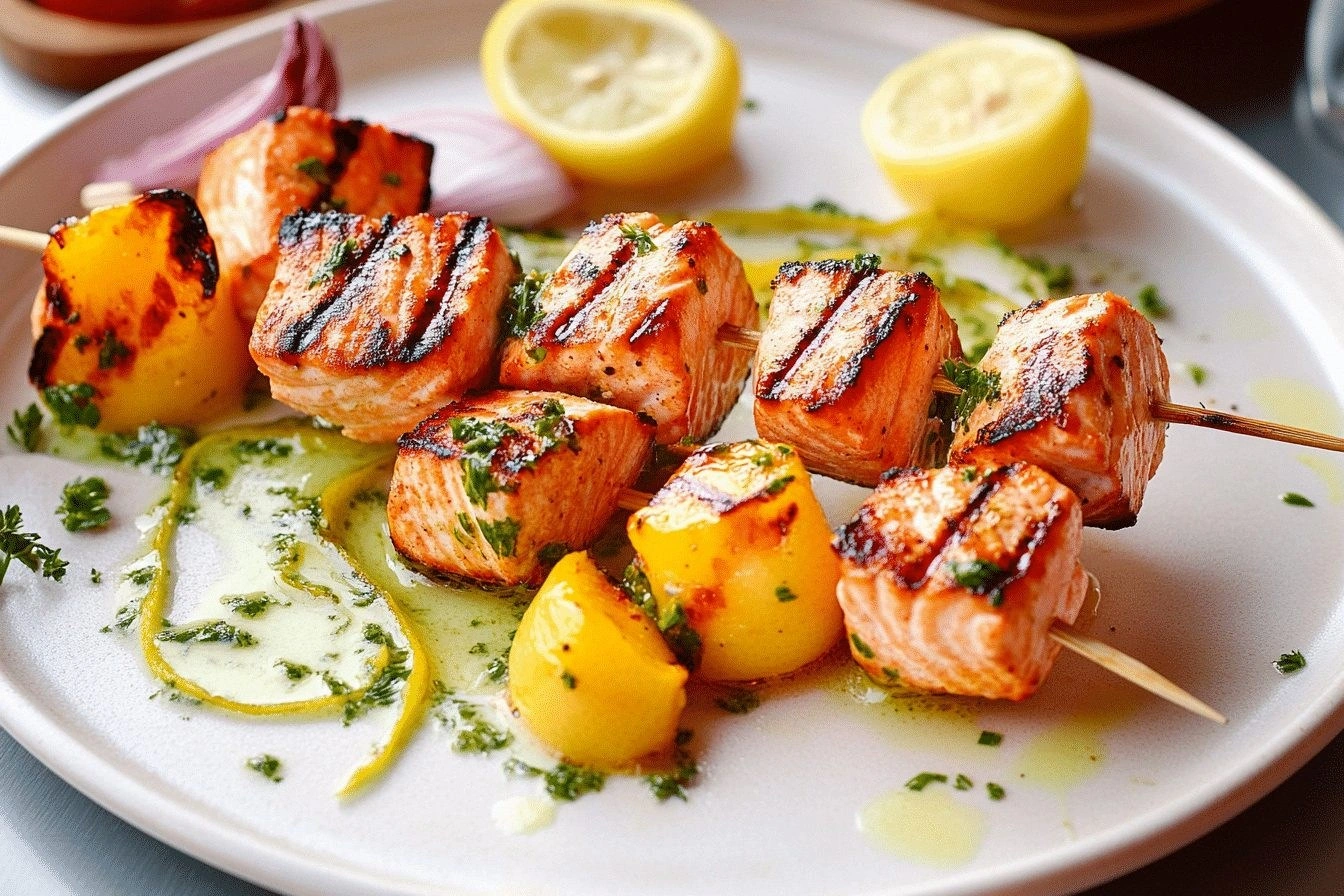
- Thread the salmon cubes onto the skewers, leaving a small gap between each piece to allow heat to circulate. Alternate with thin lemon slices to add extra flavor and a decorative touch. The lemon slices will char slightly, releasing a sweet, caramelized aroma that enhances the overall dish. Make sure the skewers are balanced so they cook evenly.
- Preheat your grill to medium‑high heat, aiming for a temperature of about 375°F (190°C). A properly heated grill will create a sear on the salmon without over‑cooking it. If you’re using charcoal, let the coals burn down to a uniform heat before placing the skewers.
- Place the skewers on the grill and cook for 3–4 minutes on each side, or until the salmon is opaque and flakes easily with a fork. The lemon slices will develop a golden crust and a slightly smoky flavor. Watch the grill closely; the goal is to achieve a char without burning the fish.
- During the last minute of grilling, brush the skewers with a little extra olive oil to keep the fish moist and to enhance the sear. This step adds a glossy finish that looks as good as it tastes. If you’re feeling adventurous, a light dusting of smoked paprika can add a subtle depth of flavor.
- Remove the skewers from the grill and let them rest for 2 minutes before serving. Resting allows the juices to redistribute, ensuring each bite stays moist. The salmon will continue to cook slightly from residual heat, so be careful not to overcook.
- Serve the skewers on a platter with fresh lemon wedges, a sprinkle of chopped parsley, and a drizzle of extra‑virgin olive oil. The final garnish adds a burst of color and a touch of brightness that completes the dish. Pair with a chilled glass of white wine or a light, sparkling beverage for the ultimate summer experience.
- If you prefer a slightly smoky flavor, try adding a few drops of liquid smoke to the marinade. This subtle addition can mimic the effect of a wood‑smoked grill and is especially useful for indoor cooking. However, use sparingly as liquid smoke is potent.
- For a quick cleanup, wipe the grill grates with a damp paper towel after each use. This prevents any lingering fish oil from burning on the next batch of food. A clean grill also helps maintain consistent heat distribution.
- If you’re serving a large crowd, keep the cooked skewers warm in a low‑heat oven (about 200°F) while you finish grilling the remaining batches. This ensures each skewer arrives hot and fresh, preserving the texture and flavor.
Insider Tricks for Flawless Results
The Temperature Rule Nobody Follows
Many people grill salmon on high heat, thinking it will cook faster. In reality, a moderate heat of 375°F allows the fish to sear without drying out. I’ve found that a quick test—placing a small piece of salmon on the grill and watching the surface—helps gauge the right temperature. If the fish starts to smoke excessively, lower the heat immediately.
Why Your Nose Knows Best
When the lemon slices start to char, the aroma will shift from citrus to smoky caramel. That scent is your cue that the fish is nearing perfection. I’ve learned to trust my nose over the clock; the smell tells you exactly when to flip.
The 5-Minute Rest That Changes Everything
Letting the salmon rest for a few minutes after grilling allows the juices to redistribute. This simple step prevents the fish from drying out when you cut into it. A quick 5‑minute rest is all you need to elevate the texture.
Keep the Skewers Dry
Moisture on the skewers can cause flare‑ups and uneven cooking. After soaking wooden skewers, pat them dry before threading the fish. This small step ensures a cleaner grill and a more consistent char.
Use a Grill Thermometer
Even a small thermometer can save you from over‑cooking. Aim for an internal temperature of 125°F for medium‑rare. If you’re unsure, a quick test with a meat thermometer is the safest bet.
Don’t Overcrowd the Grill
Leaving space between each skewer allows heat to circulate freely. Overcrowding leads to steaming rather than searing, which can ruin the texture. I always leave at least an inch of space between each skewer.
Finish with Fresh Herbs
Adding fresh herbs just before serving boosts the aroma and adds a pop of color. I sprinkle chopped parsley or dill over the finished skewers for that final flourish. This simple touch elevates the dish to a restaurant‑level presentation.
Use a Light Olive Oil
A light olive oil keeps the salmon moist without adding excessive fat. It also allows the lemon and garlic flavors to shine through. If you’re watching calories, a light olive oil is a perfect compromise.
Creative Twists and Variations
Spicy Mango Salsa Skewers
Swap the lemon zest for a handful of diced ripe mango and add a pinch of cayenne pepper. The sweet, tropical flavor pairs beautifully with the smoky salmon, creating a vibrant, beach‑inspired dish. A drizzle of lime juice at the end adds a zesty finish that complements the mango’s sweetness. This version is a crowd‑pleaser for those who enjoy a little heat and a lot of flavor.
Asian Ginger Glaze
Replace the garlic with fresh ginger and add a splash of soy sauce to the marinade. The savory umami notes deepen the fish’s flavor profile, while the ginger adds a bright, peppery kick. Finish with a sprinkle of toasted sesame seeds for crunch. This twist brings a touch of East Asian cuisine to the grill.
Herb‑Infused Coconut Oil
Use coconut oil instead of olive oil and infuse it with thyme and rosemary before marinating. The coconut’s natural sweetness complements the lemon’s acidity, while the herbs add aromatic depth. The result is a tropical, herbaceous flavor that feels like a vacation in a bowl. This variation is perfect for those who love coconut’s creamy texture.
Smoky Chipotle Marinade
Introduce a teaspoon of chipotle in adobo sauce to the marinade for a smoky, mildly spicy flavor. The chipotle’s heat pairs with the citrus and herbs, creating a complex taste. A splash of orange juice balances the heat and adds a sweet undertone. This version is ideal for those who love a bit of heat without overpowering the fish.
Greek‑Style Tzatziki Finish
Serve the grilled skewers with a side of homemade tzatziki made from Greek yogurt, cucumber, dill, and lemon. The cool, creamy sauce contrasts the warm, smoky salmon, creating a refreshing balance. Add a dash of garlic and a pinch of salt to the tzatziki for extra depth. This variation turns the dish into a complete Mediterranean experience.
Roasted Pepper Relish
Blend roasted red peppers with a touch of honey and a splash of balsamic vinegar to create a sweet‑savory relish. Spoon the relish over the grilled salmon for a burst of color and flavor. The sweetness of the peppers complements the lemon’s acidity, while the balsamic adds depth. This twist brings a rustic, farm‑to‑table vibe to the dish.
Asian Sesame Crunch
After grilling, drizzle the skewers with a mixture of toasted sesame oil and soy sauce, then sprinkle toasted sesame seeds on top. The nutty flavor of the sesame oil pairs well with the smoky salmon, while the seeds add a satisfying crunch. Finish with a squeeze of lime for brightness. This variation offers a delightful texture contrast and a savory finish.
Herb‑Roasted Potato Skewers
Thread cubes of baby potatoes, rosemary, and olive oil onto the same skewers as the salmon. Roast the potatoes until golden and tender, then add the salmon at the last minute to finish grilling. The potatoes absorb the citrusy flavors, creating a cohesive, comforting bite. This version is great for a family‑style dinner where everyone can share.
Maple‑Glazed Salmon
Swap the olive oil for a glaze of pure maple syrup and a splash of soy sauce. The maple’s natural sweetness caramelizes on the grill, creating a glossy, caramelized crust. Add a pinch of crushed red pepper for a subtle kick. This variation delivers a sweet, savory profile that’s perfect for holiday gatherings.
Barbecue‑Sauced Skewers
Finish the grilled salmon with a drizzle of your favorite barbecue sauce. The smoky, tangy sauce adds a new dimension of flavor and makes the dish feel like a backyard classic. Pair with coleslaw or corn on the cob for a complete meal. This twist is ideal for casual cookouts and family gatherings.
Fresh Tomato and Basil Skewers
Thread cherry tomatoes and fresh basil leaves onto the skewers between salmon cubes. The tomatoes add a burst of juiciness, while the basil provides a fragrant, peppery note. Finish with a drizzle of balsamic reduction for a sweet, acidic finish. This variation brings a fresh, Italian flair to the dish.
Truffle‑Infused Finish
After grilling, drizzle a light shavings of truffle oil over the skewers for an earthy, luxurious touch. The truffle’s aroma elevates the dish to gourmet status. Pair with a simple green salad to balance the richness. This version is perfect for special occasions or when you want to impress a guest.
Storing and Bringing It Back to Life
Fridge Storage
Store any leftover skewers in an airtight container for up to two days in the refrigerator. Keep the salmon pieces separate from any sauces to prevent sogginess. When ready to serve, reheat the skewers in a preheated oven at 350°F for five minutes. The oven gently warms the fish without drying it out. A light drizzle of olive oil before reheating restores moisture.
Freezer Friendly
Wrap the cooked skewers individually in parchment paper, then place them in a freezer bag. They can be frozen for up to four weeks. When you’re ready to eat, thaw them overnight in the refrigerator. Reheat in a skillet over medium heat, turning occasionally until warmed through. The fish stays moist and flavorful after freezing.
Best Reheating Method
The most effective way to bring grilled salmon back to life is to use a low‑heat oven or a skillet with a lid. This method prevents the fish from drying out and preserves the charred edges. Add a splash of water or broth to the pan before covering to create steam, which keeps the salmon moist. Finish with a squeeze of fresh lemon to revive the citrus flavor. This technique ensures each bite tastes almost brand‑new.